
-
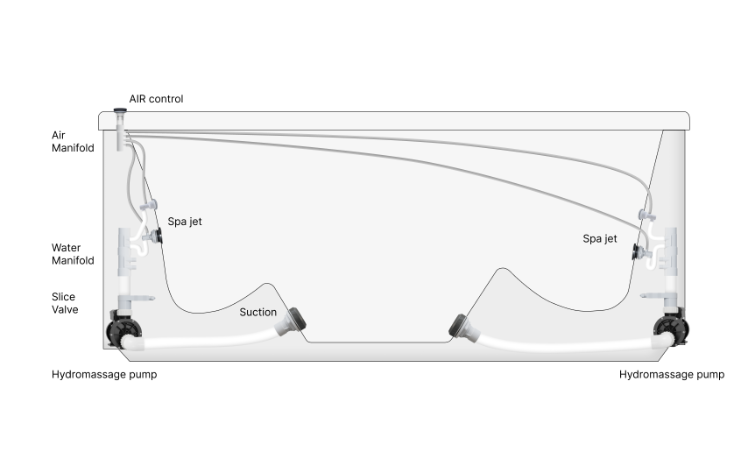
The Whirlpool system consists of a water pump, water return, heater and jets. Stable flow, stable temperature, and multiple jet jetting patterns provide you with a great massage experience.
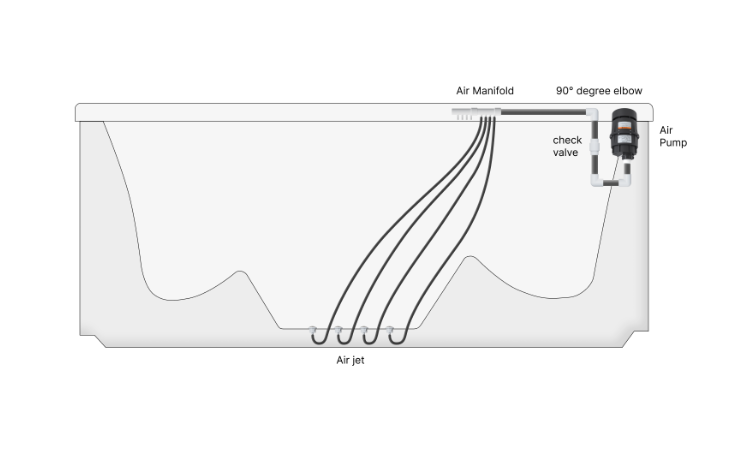
The bubble system is equipped with an air pump that drives the airflow through the tubing to the jets, a diverter tube that ensures even distribution of the airflow, and a check valve that prevents backflow.
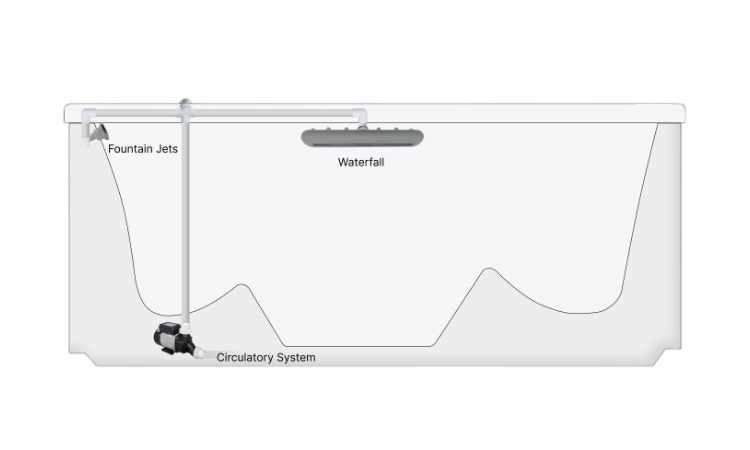
SPA water feature systems combine waterfalls with laminar jets to create stunning visual effects.
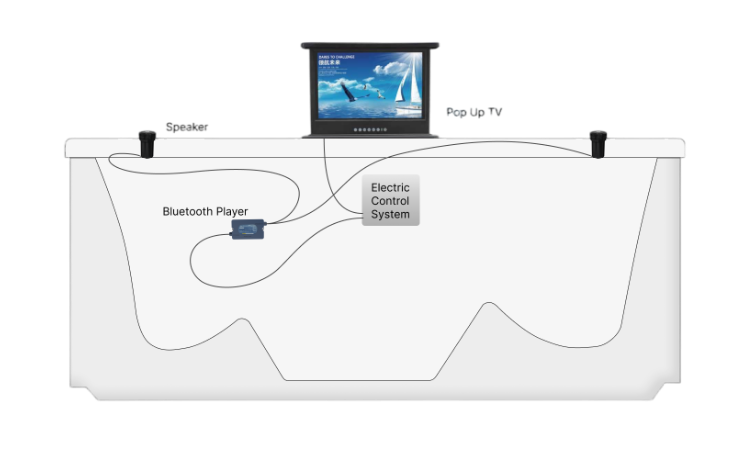
The SPA audio-visual system includes Bluetooth speakers and one TV. Users can play music or radio wirelessly, while the TV plays the user's favorite content.
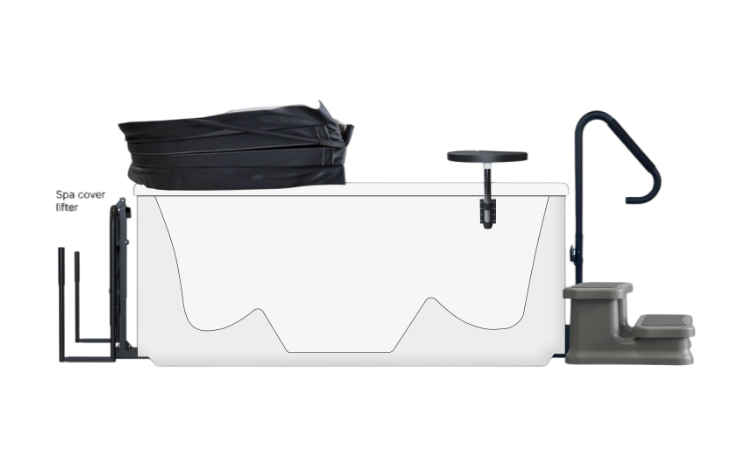
The SPA Peripheral Support System includes a spa cover, lifter, steps, handrails and caddy. The cover locks in the heat while the lifter allows easy removal of the cover. Steps and handrails ensure safe entry and exit, and the bar allows users to enjoy a drink.
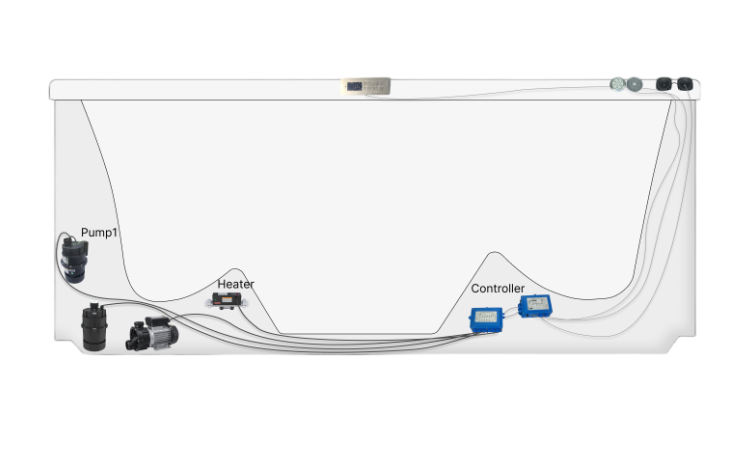
SPA Electric Control System includes controller for mobilizing the operation of other system functions, and control panel for users to operate the spa bathtub with one button.
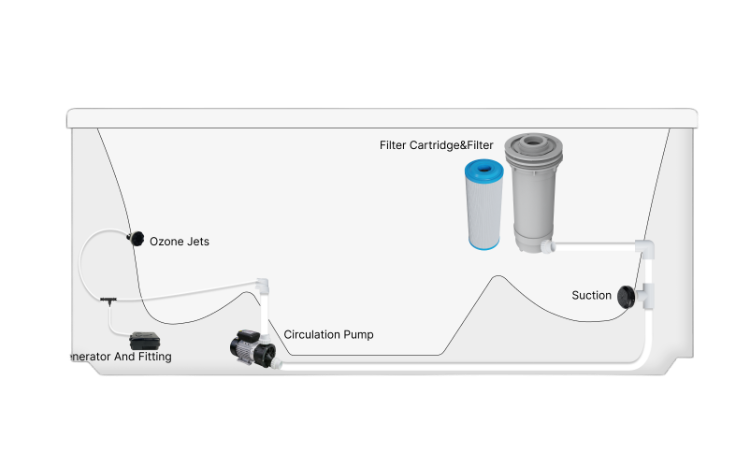
In the SPA circulation system, the filter cartridge is placed in the filter to play a filtering role, the suction and circulation pump for water circulation, the heater is used for constant temperature, the ozone generator and UV lamps are used for sterilization and disinfection.
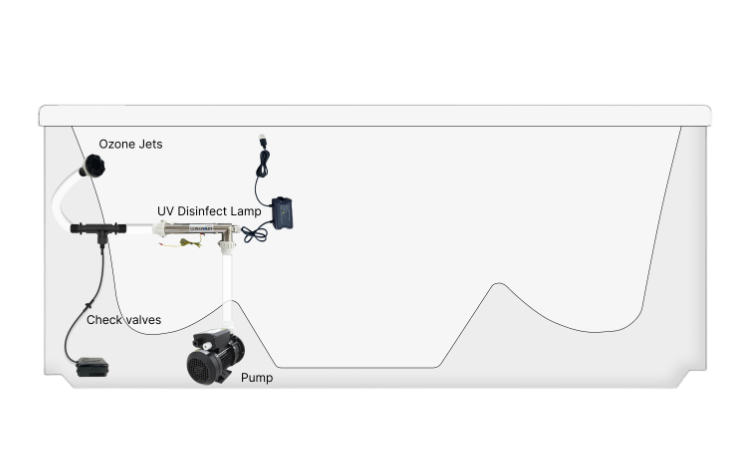
SPA sterilization system includes ozone generator and UV lamp for sterilization.
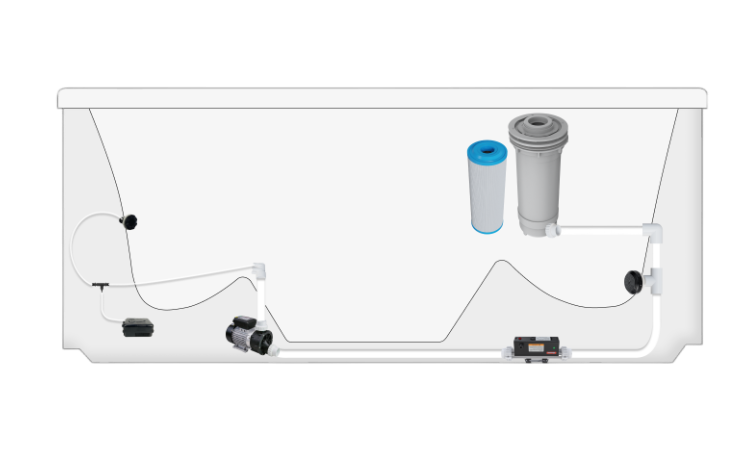
The SPA thermostat system consists of a heater that heats the water and maintains the water temperature at a constant level.
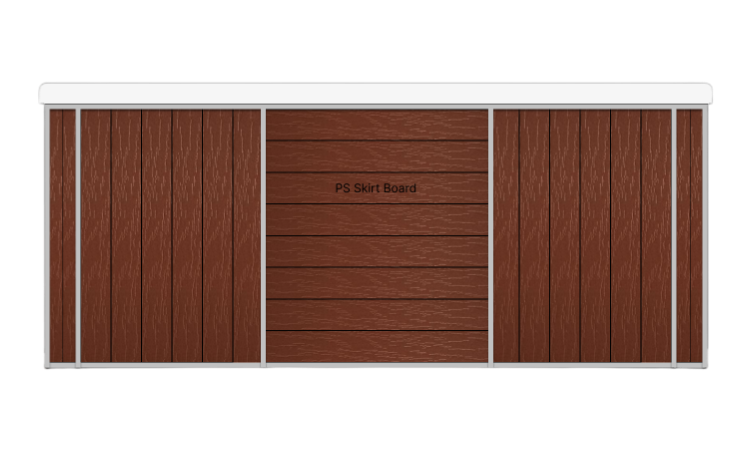
The SPA framing system includes skirt boards for the bottom and perimeter of the spa hot tub.
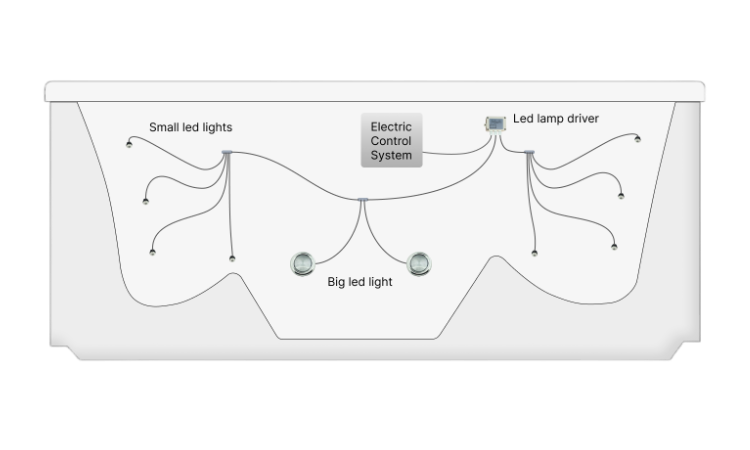
The SPA LED light system utilizes LED pool lights, mini lights, luminous nozzles and skirt strips. The LED lights provide uniform illumination, the mini lights highlight design details, and the glowing nozzles and skirting strips add a luminous ambient effect.
-
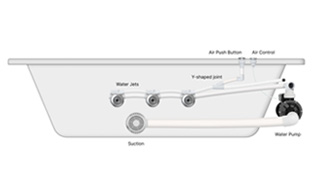
The system includes a Water Pump for powerful Water Jets, the Suction is used for circulation, the Water Heaters maintains the water temperature, the air regulator and switch are used to adjust the intensity of the massage, and the Hoses & Fittings ensure the stable operation of the various components of the system.
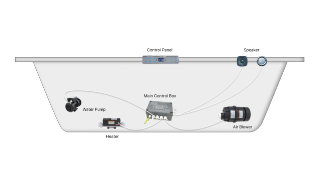
Bathtub electric control system includes controller to mobilize bathtub pump, lighting, sterilization and other functions.control panel is used to gather commands on and off for easy operation.
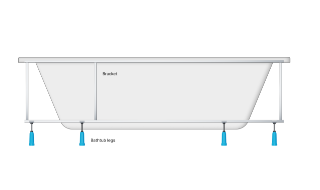
The bathtub support system consists of a support frame and bathtub legs. The frame distributes the weight evenly; the bathtub legs are height-adjusted to prevent shifting or tilting during use.
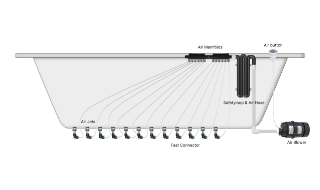
The air pump in the bathtub bubble system is used to provide power and air, the air hose is used to connect the air pump and the jets and deliver the air, the manifold delivers the air to the different jets, the air jets are used to spray to produce bubbles, and the check valve is used to prevent the air from flowing backward.
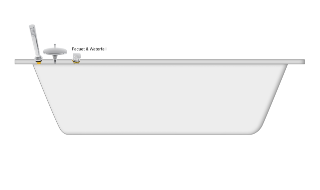
TThe bathtub water inlet system includes a faucet set and a waterfall faucet that allows you to adjust the water flow and temperature.
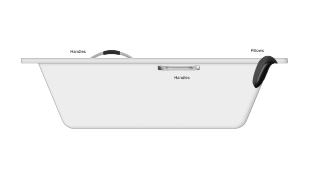
The Bathtub Comfort System has pillows for neck and back support. Armrests provide stability for safe entry and exit, reducing the risk of slipping.
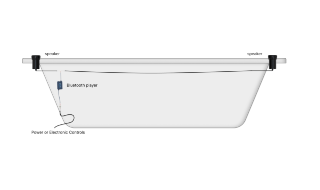
The bathtub audio-visual system is equipped with Bluetooth function, which can wirelessly connect to smartphones, iPads and other devices to play music easily.
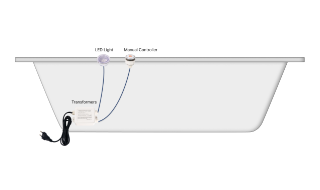
The bathtub lighting system includes LED light kit components to provide basic lighting for bathing and to create ambiance.
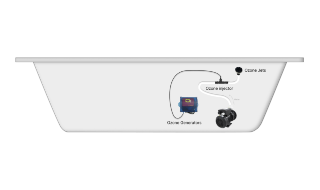
The bathtub ozone system consists of an ozone generator for generating ozone to sterilize the water for bacteria and a check valve to ensure one-way flow of air without backflow.
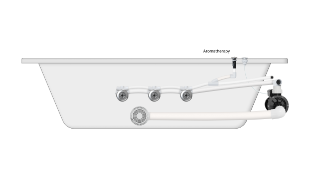
The bathtub aromatherapy system is equipped with an atomizing device that releases essential oils into the water, filling the space with a soothing aroma.
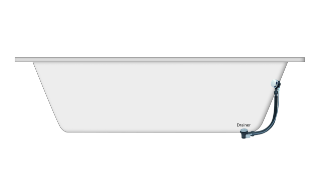
The drain in a bathtub drain system efficiently drains water to prevent clogging or pooling.
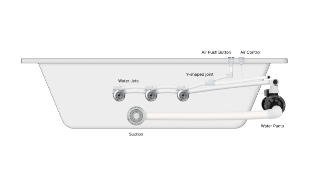
Bathtub thermostat systems are heaters that ensure a consistent and comfortable water temperature.
-
-




How Hydrorelax Met ACS's Custom Spa Cover Packaging and Quality Requirements
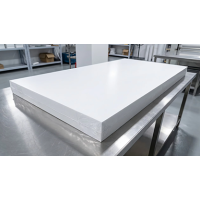
First published: August 7, 2026 · Last updated: September 8, 2026 · By Sofia · Category: Customer Case Study · Customer: ACS (United States)
In early 2026, ACS contacted Hydrorelax with an inquiry for spa covers. Through remote communication and technical alignment, ACS set three requirements: staple-free and tape-free carton packaging, double-layer PE film heat sealing for the EPS foam, and an EPS foam density tolerance within ±1.5 kg/m³ with full incoming and outgoing inspection. We turned each requirement into a production, inspection, and traceability procedure.
Project Requirements and Challenges: Why Did ACS Set Three Strict Standards?
ACS used clear packaging, sealing, and inspection requirements to reduce uncertainty during production, transportation, and storage.
1. Cartons Without Staples or Transparent Tape
ACS required the outer cartons to use strong adhesive instead of metal staples or transparent tape. The purpose was to reduce the risk of scratches or contamination during transportation and storage while keeping the packaging clean. Removing the conventional fastening methods, however, placed greater demands on carton sealing strength and stability.
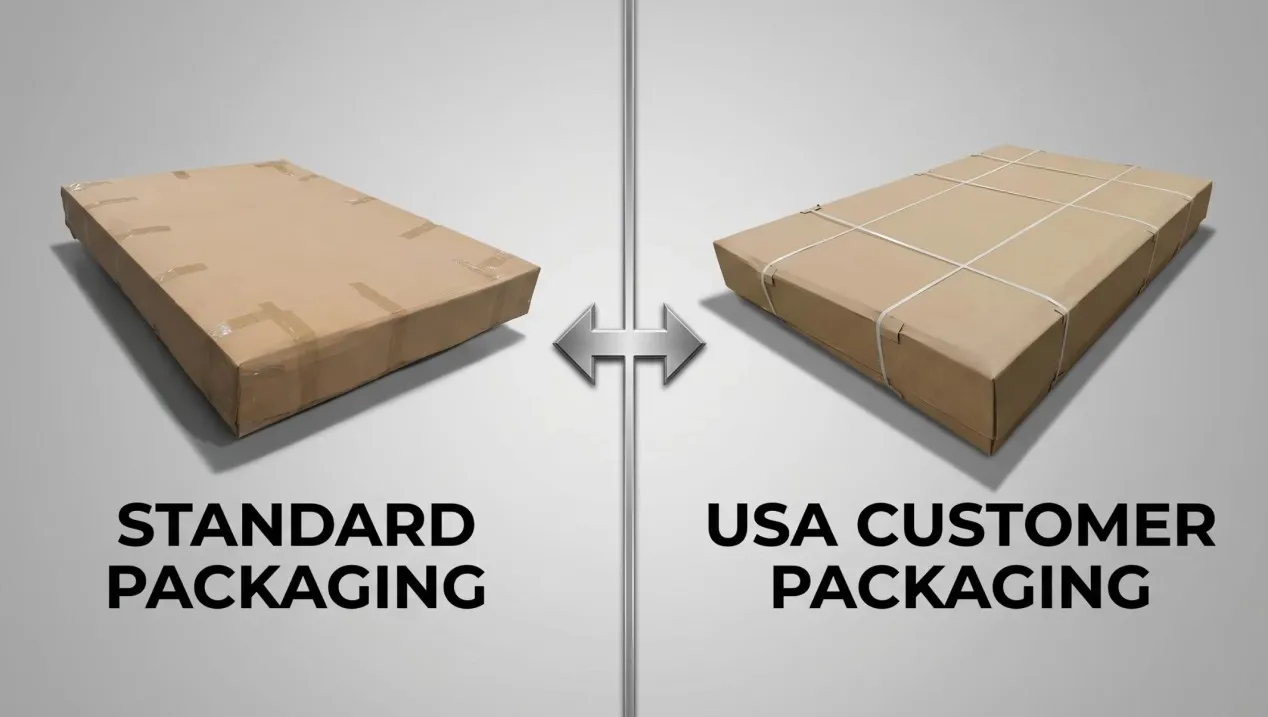
Standard Packaging vs. USA Customer Packaging
2. Double-Layer PE Film Heat Sealing for EPS Foam
ACS required the EPS foam inside the spa cover to use double-layer PE film heat sealing instead of conventional single-layer film packaging. The added layer improves moisture and dust protection, but it also requires closer control of film flatness, heat-sealing operation, and seal consistency.
For an overview of the full production sequence, see how manufacturers produce spa covers.
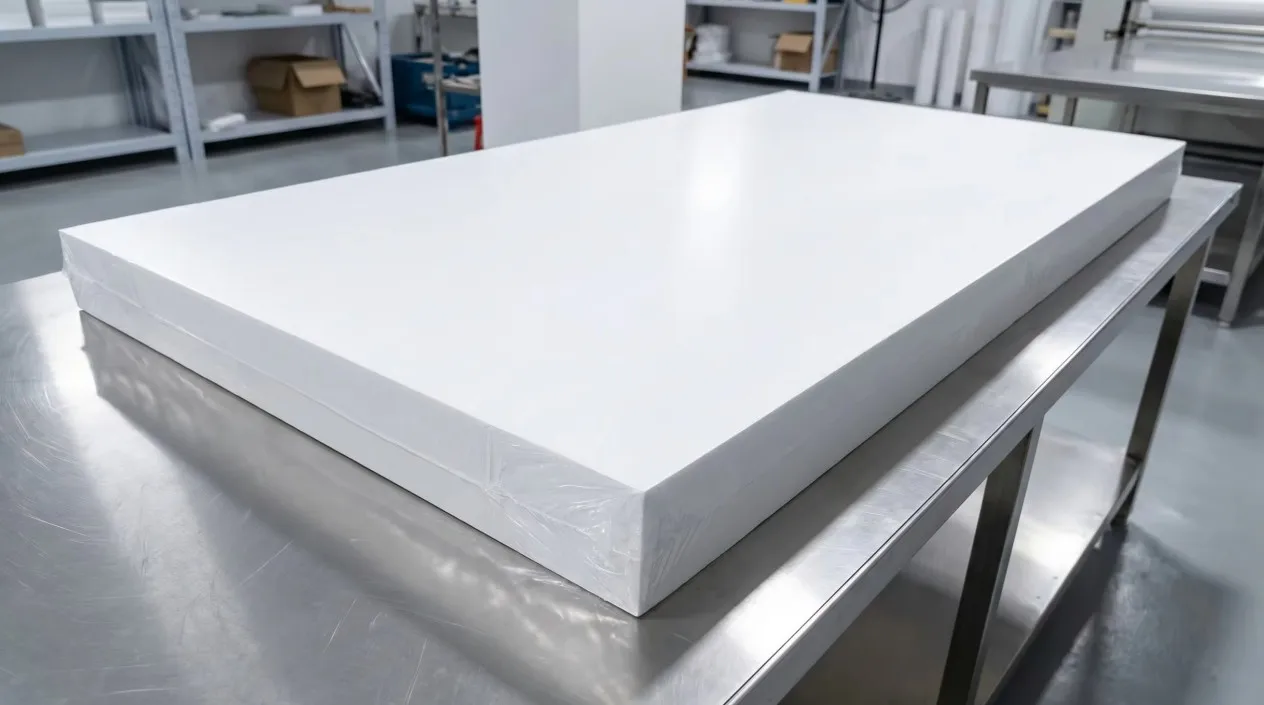
Double-Layer Thermoplastic Process
3. EPS Foam Density Tolerance Within ±1.5 kg/m³
ACS required the EPS foam density deviation to remain within ±1.5 kg/m³, with full inspection of incoming materials and products before shipment. The source material identifies the conventional industry tolerance as approximately ±3 kg/m³, so the narrower range required more stable raw materials, more frequent checks, and batch-level records.
Foam density is one factor in spa cover insulation structure. For additional technical context, read whether spa cover R-value is important.
Hydrorelax's Execution Plan: How Were the Requirements Built Into Production?
Our technical, production, and quality teams evaluated the project together and created separate procedures for carton bonding, film sealing, and foam inspection.
Adhesive Testing for Staple-Free and Tape-Free Cartons
We screened and tested multiple high-strength adhesives that met the environmental requirements. The testing cycle lasted approximately 15 days and involved hundreds of adhesive samples.
The selected adhesive achieved initial positioning in approximately 3 seconds and reached bonding strength within 60 seconds that could tear the cardboard fibers before the joint failed. This allowed us to remove staples and transparent tape while maintaining carton integrity for ocean transportation and storage.
A Zero-Wrinkle Checkpoint for Double-Layer Heat Sealing
We revised the heat-sealing work instructions, required operators to smooth the film before sealing, and added a zero-wrinkle inspection checkpoint after the first sealing layer. We also increased the frequency of in-process inspections.
To apply the new standard consistently, we reduced the line's single-shift output by 20%. The project record states that the product yield increased from approximately 97% to 99.8%.
Full Incoming and Outgoing Inspection
Before storage, quality inspectors checked each incoming EPS foam unit. Before shipment, every spa cover scheduled for delivery received a second verification. Batch data was recorded so that any issue could be traced to the relevant batch and supplier.
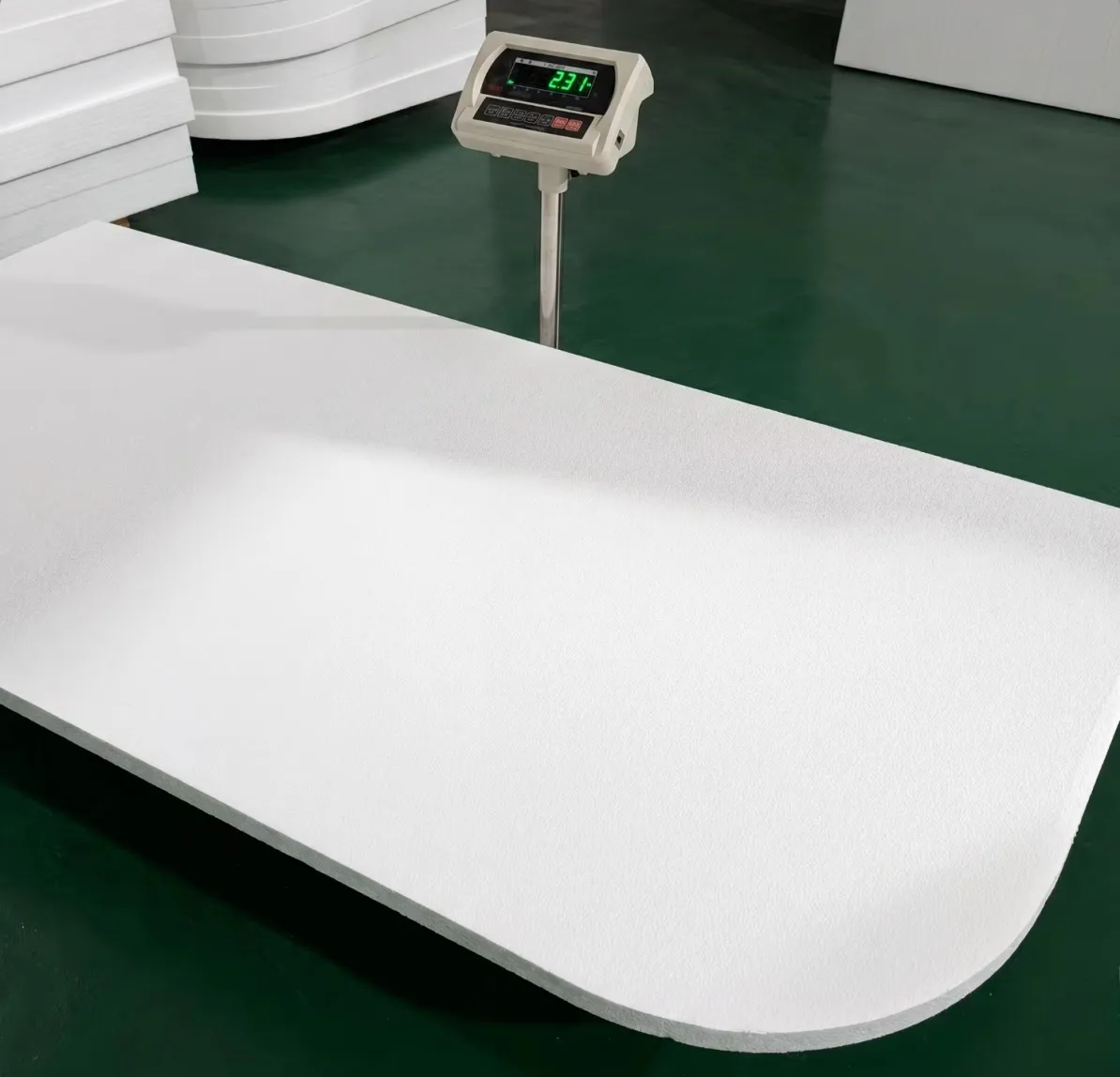
Dual Inspection System
A quality review should consider the internal structure, materials, and inspection records rather than appearance alone. See our guide on how to assess spa cover quality.
Delivery and Customer Feedback: How Did Continuous Shipments Validate the Process?
After the first batch reached the United States, ACS commissioned a third-party incoming inspection. The project record states that the carton sealing strength, PE film heat-sealing quality, and EPS foam density met the agreed specifications, with a 100% inspection pass rate.
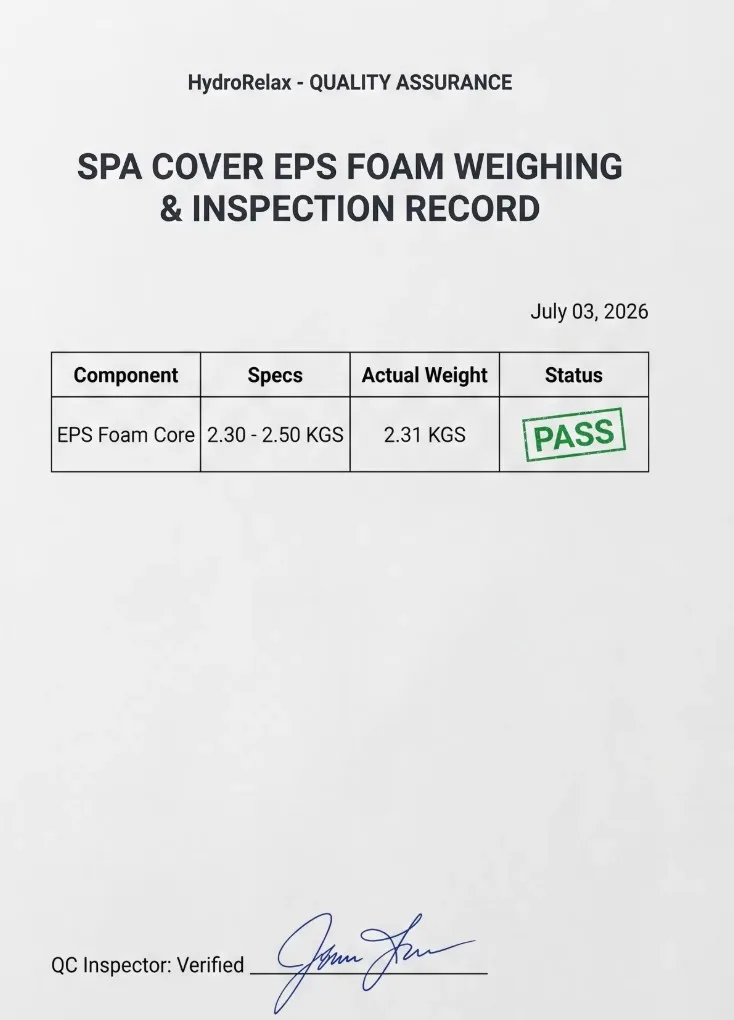
Test Report
The displayed Hydrorelax weighing and inspection record is dated July 3, 2026. It lists an EPS foam core specification of 2.30–2.50 KGS, an actual weight of 2.31 KGS, and a result of PASS.
Across three consecutive months of shipments, the project record states that the EPS foam density data for all delivered batches remained within ACS's required ±1.5 kg/m³ tolerance.
After the project was completed, ACS's procurement manager wrote:
"Your commitment to details has even exceeded the level of our local suppliers. We would be very pleased to include your company in our global preferred supplier list."
— ACS Procurement Manager
The feedback recognized both the delivered products and the team's process for turning custom requirements into production controls, inspection steps, and traceable records.
Four Project Takeaways: What Supported the ACS Delivery?
Four actions helped the team move from technical alignment to repeat delivery:
- Convert special requests into measurable standards. Packaging, sealing, and foam tolerances were tied to defined execution and inspection conditions.
- Validate the method before continuous production. The team tested adhesive options for approximately 15 days instead of using an unverified substitute.
- Adjust output to protect process control. Single-shift production was reduced to support the added sealing checkpoint and inspection frequency.
- Maintain traceability through dual inspection. Incoming and outgoing checks were supported by batch records.
Buyers comparing cover construction, shipping volume, and replacement cost can also review our spa cover skin sourcing guide.
Looking Ahead: How Will the Partnership Continue?
This project reinforced a practical point in international procurement: trust is easier to maintain when requirements are supported by inspectable procedures, measurable data, and traceable records. We look forward to continuing the partnership with ACS based on the confirmed technical standards and delivery history, while evaluating opportunities across additional product lines.
For projects serving cold regions, see our guide to spa cover materials for winter-ready markets.
Work With Us: How Can We Evaluate Your Custom Spa Cover Requirements?
If your spa cover project includes specific dimensions, packaging methods, foam density, material combinations, or inspection requirements, our technical, production, and quality teams can review the conditions before confirming the production plan. For lifecycle and cost considerations, read our guide to spa cover lifespan and cost control.
Frequently Asked Questions
1. Can Hydrorelax evaluate special spa cover packaging requirements?
Yes. Buyers can provide requirements for packaging materials, sealing methods, labels, transportation, and storage. Our team reviews the requirements and validates the proposed materials and processes before confirming execution.
2. Why did ACS request cartons without staples or transparent tape?
According to the project material, ACS wanted to reduce the risk of metal staples or tape scratching or contaminating the product surface during transportation and storage while keeping the packaging clean.
3. What were the main control points for double-layer PE film heat sealing?
The main control points were film flatness, heat-sealing operation, and seal consistency. The project added a zero-wrinkle inspection checkpoint after the first sealing layer.
4. How was the EPS foam checked?
The project used full incoming and outgoing inspection, supported by batch traceability records. The specific test items and allowed tolerances should follow the technical documents confirmed for each order.
5. Can Hydrorelax assess other custom spa cover requirements?
Yes. We can evaluate project requirements covering dimensions, structure, materials, packaging, and inspection conditions. Buyers should provide complete specifications so the relevant teams can confirm feasibility and controls.
Planning a spa cover project with specific technical or quality requirements?
Contact us with your dimensions, materials, packaging conditions, and inspection criteria.
Contact us with your dimensions, materials, packaging conditions, and inspection criteria.
— End of case study · First published August 7, 2026 · Updated September 8, 2026 —