




Is Spa Cover R-Value Really Important?
When comparing two spa covers with different R-Values, many buyers assume that the higher number always means better insulation performance.
However, R-Value is only one factor to consider. Foam core structure, material stability, sealing design, moisture protection, and overall construction also affect a spa cover's real-world insulation performance.
Understanding these details helps spa brands, distributors, and importers make better purchasing decisions beyond a single specification.
What Is Spa Cover R-Value?
R-Value is a measurement used to describe the thermal resistance of a material. Simply put, the higher the R-Value, the better the material is at slowing down heat transfer.
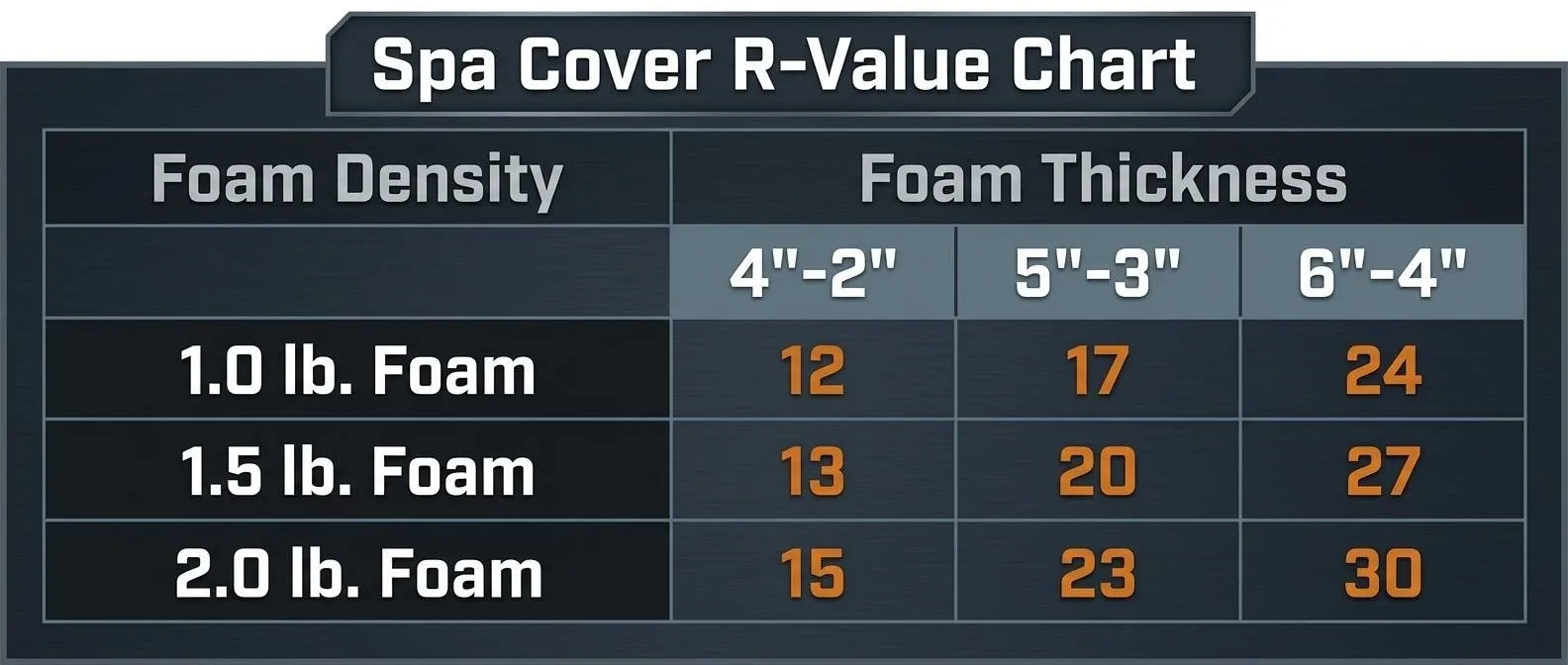
For spa covers, R-Value is mainly used to describe the insulation capability of the internal foam core. Depending on foam thickness, density, and structural design, common spa cover configurations in the market usually have R-Values ranging approximately from R-13 to R-24.
The chart above covers a wider band, from R-12 to R-30, because it also includes high-end combinations such as 2.0 lb foam with a 6"-4" tapered core. The two ranges are not in conflict: R-13 to R-24 is where the bulk of production configurations sit, while the chart is the full matrix including those high-end builds. A single cell of that chart only means something when the density and the thickness are read together.
However, it is important to understand that a spa cover's R-Value is not determined by the foam material alone. Different suppliers may achieve different test results depending on:
- Foam thickness
- Foam density
- Foam structure
- Testing methods and conditions
Therefore, when comparing different spa cover products, looking only at the R-Value number may not provide the complete picture.
Key point: Two suppliers can both cite "ASTM-tested R-Value" and still publish different numbers for physically similar covers — because the number depends on which thickness point was measured and under what test conditions. The next two sections explain both variables.
Why Do Different Spa Covers Have Different R-Values?
The main differences in spa cover insulation performance usually come from the design of the foam core. One of the most direct factors is foam thickness.
Foam Thickness
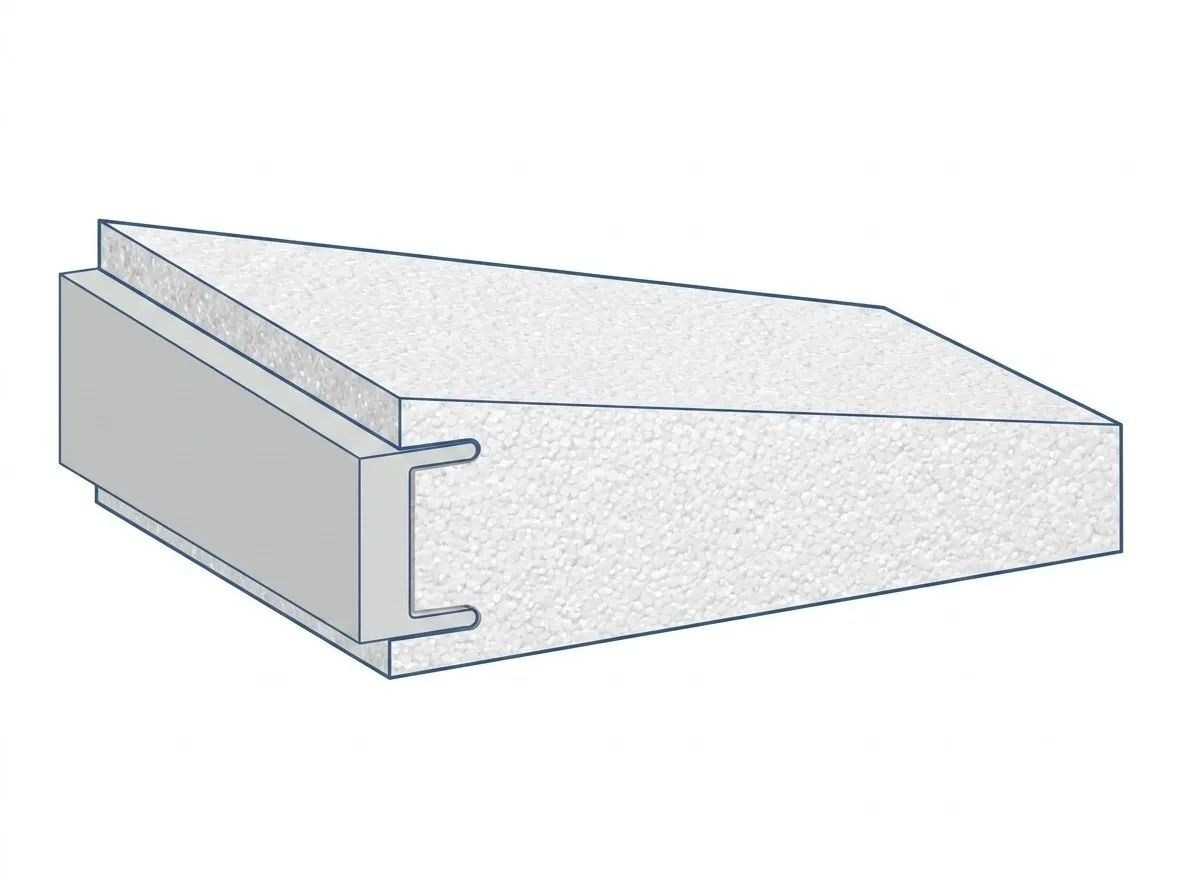
Most spa covers use foam cores with thicknesses ranging approximately from 3 inches to 5 inches (7.5 cm–12.5 cm). A thicker foam layer generally creates a longer path for heat transfer, which helps improve insulation performance.
However, professional hot tub covers are not simply made with one flat piece of foam with the same thickness across the entire cover. To improve water drainage and maintain structural stability, most quality spa covers use a tapered design — the foam is thicker in the center and gradually becomes thinner toward the edges.
This design helps prevent rainwater from accumulating on the cover surface while maintaining sufficient insulation thickness where it matters most.
Foam Density
Besides thickness, foam density is another important factor affecting R-Value and long-term performance. Most spa covers use EPS (Expanded Polystyrene) foam as the primary insulation material.
Higher-density EPS foam generally provides:
- Better structural support
- Improved shape stability
- Better resistance to long-term compression
However, higher density does not always mean better performance in every situation. Increasing foam density also means:
Higher Material Cost
Denser EPS consumes more raw material per cubic foot, directly raising the unit cost of every cover in a container order.
Increased Product Weight
A heavier cover is harder for the end user to lift daily, which can create handling complaints and after-sales friction.
Higher Transportation Requirements
Added weight affects freight cost calculations and may change how covers are stacked and protected during shipment.
Market Fit Trade-off
Manufacturers must balance foam density, product positioning, shipping requirements, and target market expectations.
For exported spa covers, selecting the right combination of foam thickness and density is usually more practical than simply pursuing the highest possible R-Value.
Why Sealing Performance Matters as Much as R-Value
Foam thickness and density are important factors behind R-Value, but they do not tell the whole story. A spa cover's real insulation performance also depends on how well the entire cover system prevents heat loss. One commonly overlooked factor is sealing performance. Several areas require special attention.
Skirt Design
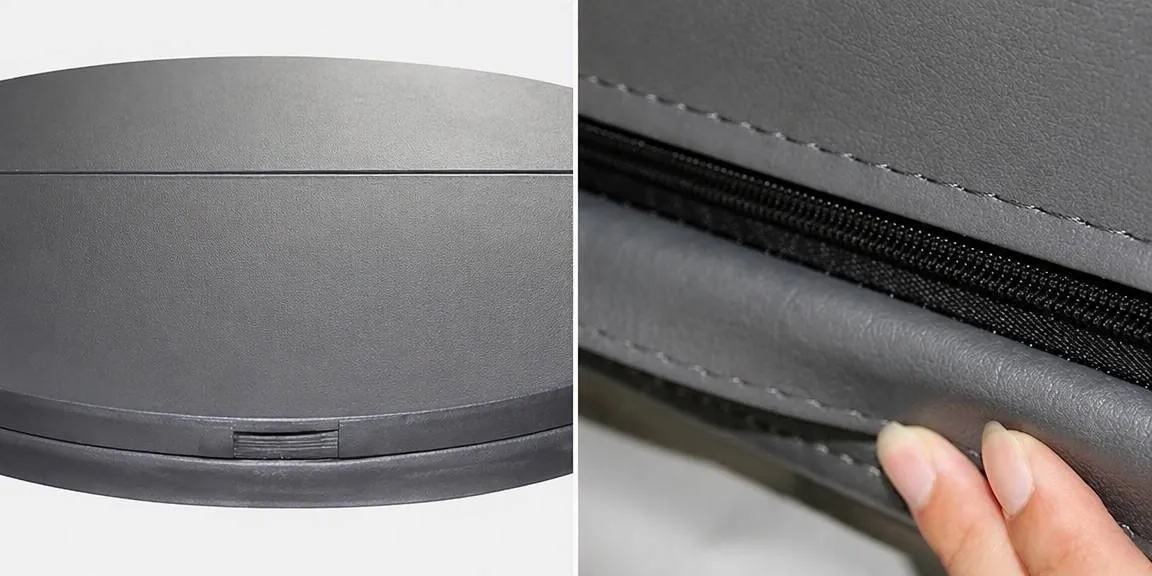
The skirt is the part of the spa cover that extends downward and creates contact with the hot tub cabinet. Although it may seem like a small detail, the skirt design has a direct impact on how well the cover seals the spa.
If the skirt is too short, there may be gaps between the cover and the spa cabinet. Warm air can escape through these areas, especially during cold weather conditions.
On the other hand, if the skirt is designed according to the actual spa dimensions, it can help reduce air leakage and create a more effective insulation barrier.
This is also why accurate measurements are important when customizing a spa cover. A cover with a high R-Value may still lose heat faster than expected if the overall size and skirt design do not properly match the spa.
Hinge Area Design
The hinge area is one of the most challenging parts of a spa cover design. Since users need to fold the cover open frequently, this area must provide enough flexibility while minimizing heat loss.
A common example is the center hinge section of a two-panel spa cover. Because the foam core is thinner in this area to allow folding, the hinge becomes a potential weak point for insulation.
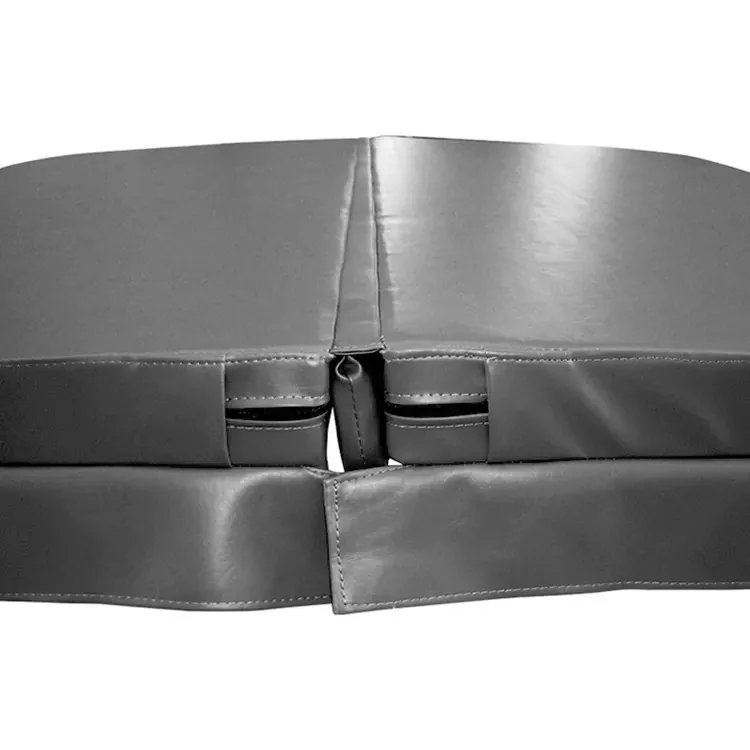
Professional manufacturers need to carefully control the hinge construction, including:
- Hinge width
- Foam transition design
- Vapor barrier protection
- Outer skin sealing
A poorly designed hinge area may allow more heat to escape or create a weak point where moisture can enter over time. A well-designed hinge, however, can provide convenient daily use while maintaining better overall insulation performance.
Moisture Protection
A spa cover is exposed to outdoor conditions throughout the year, including rain, humidity, temperature changes, and steam from heated water. One common issue in lower-quality covers is moisture entering the foam core.
If the vapor barrier or sealing system is not properly designed, water vapor may gradually penetrate the EPS foam. Once the foam absorbs moisture, several problems can occur:
The Cover Becomes Heavier
Water-loaded foam adds significant weight, making the cover difficult for end users to handle in daily operation.
The Foam Loses Insulation Capability
Moisture displaces the trapped air inside the EPS structure, and the rated R-Value no longer reflects actual thermal performance.
The Foam Core May Deform
Absorbed water accelerates sagging and warping, breaking the tapered geometry that drains rainwater.
The Cover No Longer Fits Tightly
Once deformation begins, the sealing interface with the spa shell is lost and heat escapes continuously.
Practical implication: A cover rated R-20 that absorbs moisture over two seasons may deliver less real-world insulation than a properly sealed R-14 cover. Moisture protection is not a secondary feature — it determines whether the rated performance survives the product's service life.
How Should Buyers Evaluate Spa Cover Insulation Performance?
For spa brands, importers, and distributors, evaluating a spa cover supplier requires looking beyond the specification sheet. Important questions include:
- What type of foam material is used?
- What is the foam density?
- How is the foam thickness designed?
- Does the cover use a tapered foam structure?
- How is moisture protection handled?
- How is edge sealing designed?
Spa Cover Insulation Performance FAQ
Does a higher R-Value mean a better spa cover?
Not always. R-Value measures the insulation performance of the foam core, but the overall performance also depends on sealing, materials, and design.
Why do two spa covers with the same R-Value perform differently?
Because insulation performance is affected by more than the foam core, including cover structure, edge sealing, hinge design, and material quality.
Is higher foam density always better?
Not necessarily. The ideal foam density depends on insulation needs, weight requirements, and cost considerations. See also: Wholesale Custom Spa Covers from China.
Why does spa cover insulation decrease over time?
Main reasons include foam moisture absorption, material aging, reduced sealing performance, and structural deformation. See also: spa cover lifespan and cost control.
Hydrorelax Final Thoughts
For spa covers, R-Value is an important measurement for insulation performance, but it does not represent the entire product.
For bulk buyers, choosing the right spa cover supplier requires a deeper understanding of product structure, material selection, manufacturing processes, and long-term outdoor performance.
Instead of focusing only on one number, buyers should consider the complete design and application requirements.
Next steps for buyers:
- Send us your spa dimensions and target market for a tailored foam density and thickness recommendation.
- Continue reading our related blog: Why Do Spa Covers Use Aluminum C-Channel Support.
Article reviewed by the Hydrorelax Product Engineering team.