




Why Is the Air Blower So Loud After Installation?
This blog is for anyone choosing spa parts, handling after-sales issues, or dealing with a blower that sounds too loud.
Some noise is normal.
Some noise means something isn't right with the design, installation, or condition.
Some noise is a warning sign that needs action right away, or it can lead to after-sales problems.
If you can tell the difference, many issues, rework risks, and back-and-forth discussions can be avoided from the start.
Why is an air blower louder than a water pump?
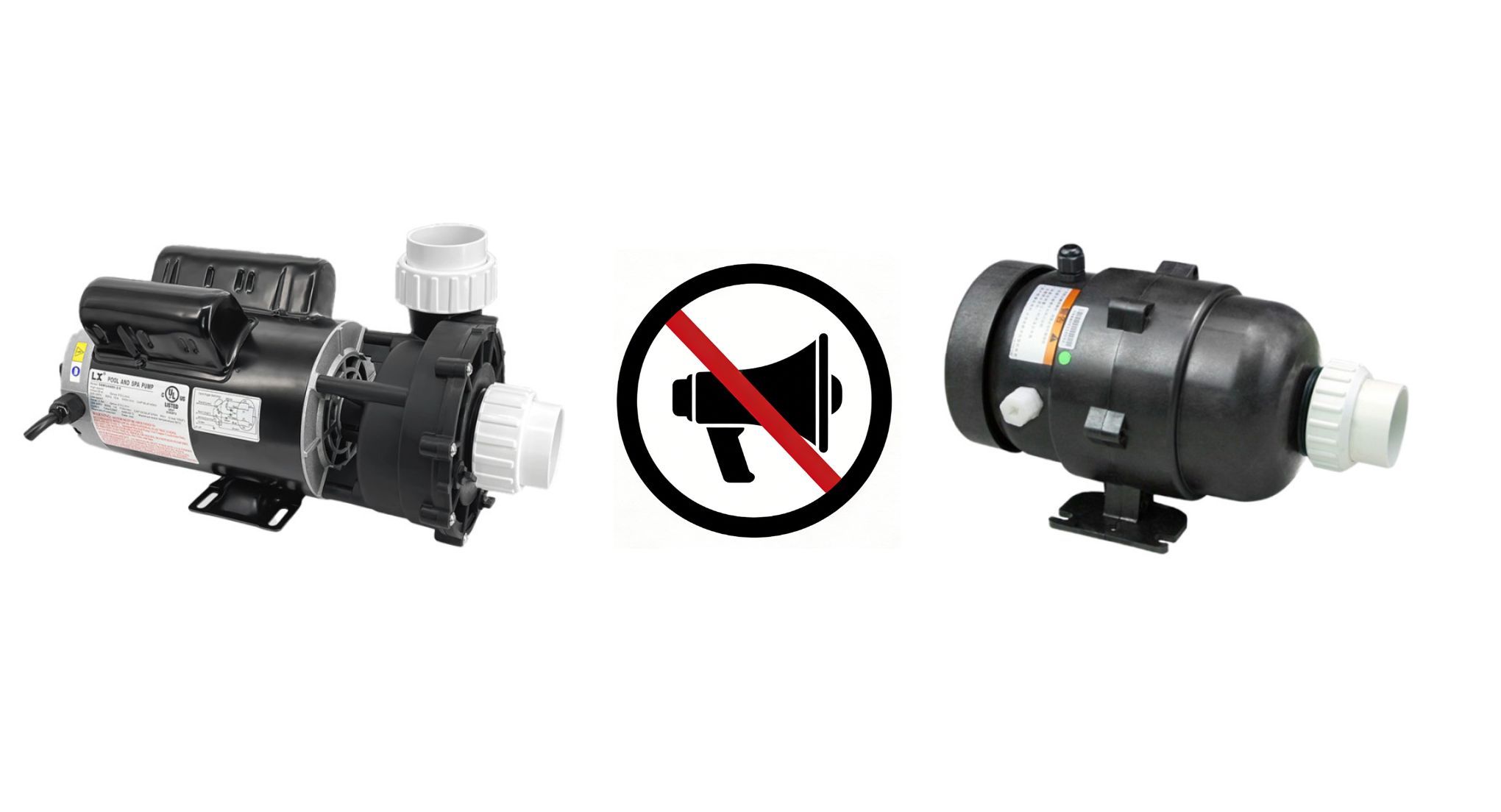
Almost everyone upgrading from a water-pump-only system to one with an air blower feels the same thing at first:
Why did it suddenly get so loud?
Here's the key point:
Even with no faults at all, an air blower usually makes more noise than a water pump.
The reason is simple. It's basic physics.
Water and air are very different in density.
Water is dense and heavy. It has high inertia.
With the same force, a water pump does not need very high speed to work.
Air is very light. To push air through pipes, jets, and into the water, the motor must run much faster.
Higher speed means more mechanical noise and more airflow noise.
So:
A water pump sounds deeper and lower.
An air blower sounds sharper and higher.
This is not a quality issue. It's a difference in the medium.
Understanding this is the first step in knowing what's normal and what's not.
When Spa Blower Noise Is Normal?
From many real cases we've seen, noise caused by the blower itself is actually rare.
Most issues come from three things:
design, installation, and use or maintenance.
1. Common installation-related noise issues
In many cases, the blower is not making the noise by itself.
The structure around it is amplifying the sound.
The most common issue is missing vibration isolation.
If the blower is rigidly screwed onto a wooden frame or floor, small vibrations travel through the whole spa.
In the end, it sounds like the entire unit is shaking.
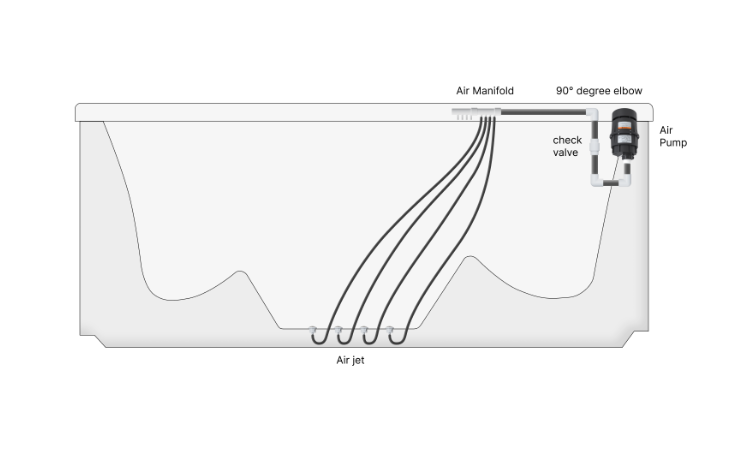
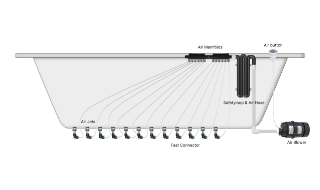
Another common issue is loose air pipes.
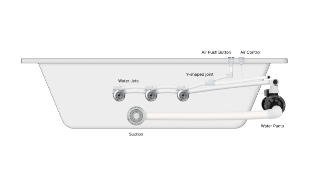
If PVC air lines are hanging free, too long, or not supported at bends, strong airflow makes them hit the frame or shell.
This noise can be louder than the blower itself.
The fix is simple and proven:
1. Add rubber pads between the blower base and the frame.
2. Secure air pipes with ties or clamps so they can't move.
These details may look small on a drawing, but in real use, they make a big difference.
2. The most overlooked issue: air intake noise
An air blower doesn't blow air in.
It pulls air in first, then pushes it out under pressure.
If the intake area is too tight, too close to other parts, or partly blocked by debris, fast airflow will create whistling or strong wind noise.
Sometimes the blower itself is perfectly fine, but it sounds "broken".
In real projects, we usually suggest:
1. Leave at least 15–20 cm of open space in front of the air intake.
2. Keep the equipment bay clean. No spider webs, leaves, or insulation fibers.
3. If possible, use a larger intake cover or a simple noise-reduction design.
This is especially important for mid- to high-end models where quiet operation matters.
Noise issues linked directly to equipment condition
Blower aging and wear
As time goes on, a few things naturally happen:
1. Bearing wear
2. Dust build-up inside the motor
3. Slight impeller deformation or imbalance from dirt
All of these can cause humming, rubbing sounds, or extra vibration at high speed.
If the noise is constant and clearly abnormal, replacing the blower is usually more practical than repairing it.
Bearing-level repairs are rarely cost-effective or reliable.
Water entering the air line: the most dangerous noise
This is something we really need to stress.
If you hear a "gurgling" sound or anything like water hammer, this is no longer about noise.
It's a system safety issue.
Water may have flowed back through the jets into the air line and could be close to the blower.
Common causes include:
1. Water level below the lowest air jet
2. Failed check valve
3. Wrong operating sequence (starting the blower before purging air)
Clear recommendations:
Always keep the water level above the marked water line
After use, run the water pump first to purge air, then start the blower
If water ingress is suspected, drain and check the lowest point of the air line
If ignored, this issue can easily lead to motor damage or serious after-sales problems.
Different sounds, different signals
People who work with blower systems for a long time often rely on their ears to judge the status.
High-pitched whine or squeal: usually bearing damage or impeller deformation — stop and check immediately
Constant humming: may relate to power, motor imbalance, or loose mounting
Water hammer or gurgling: check the check valve, water level, and return flow first
Sound itself is the most direct clue for diagnosis.
How to troubleshoot air blower noise
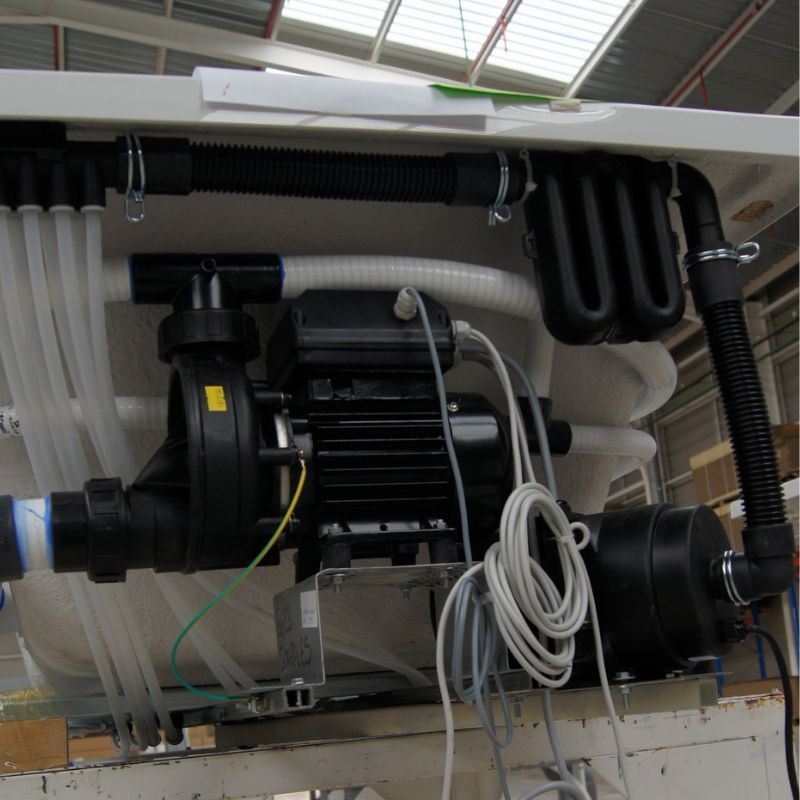
For after-sales or on-site checks, we usually start with low-cost, low-risk steps.
Basic checks:
1. Is the voltage correct?
2. Is the intake clear?
3. Are there any obvious air locks?
If the problem continues, move to structural checks:
4. Is the impeller tangled with debris?
5. Are the pipe diameter and blower power matched?
6. Are the pipe bends too tight?
Many noise issues are not caused by a single factor, they are usually a combination of several.
Experience sharing on choosing the right blower
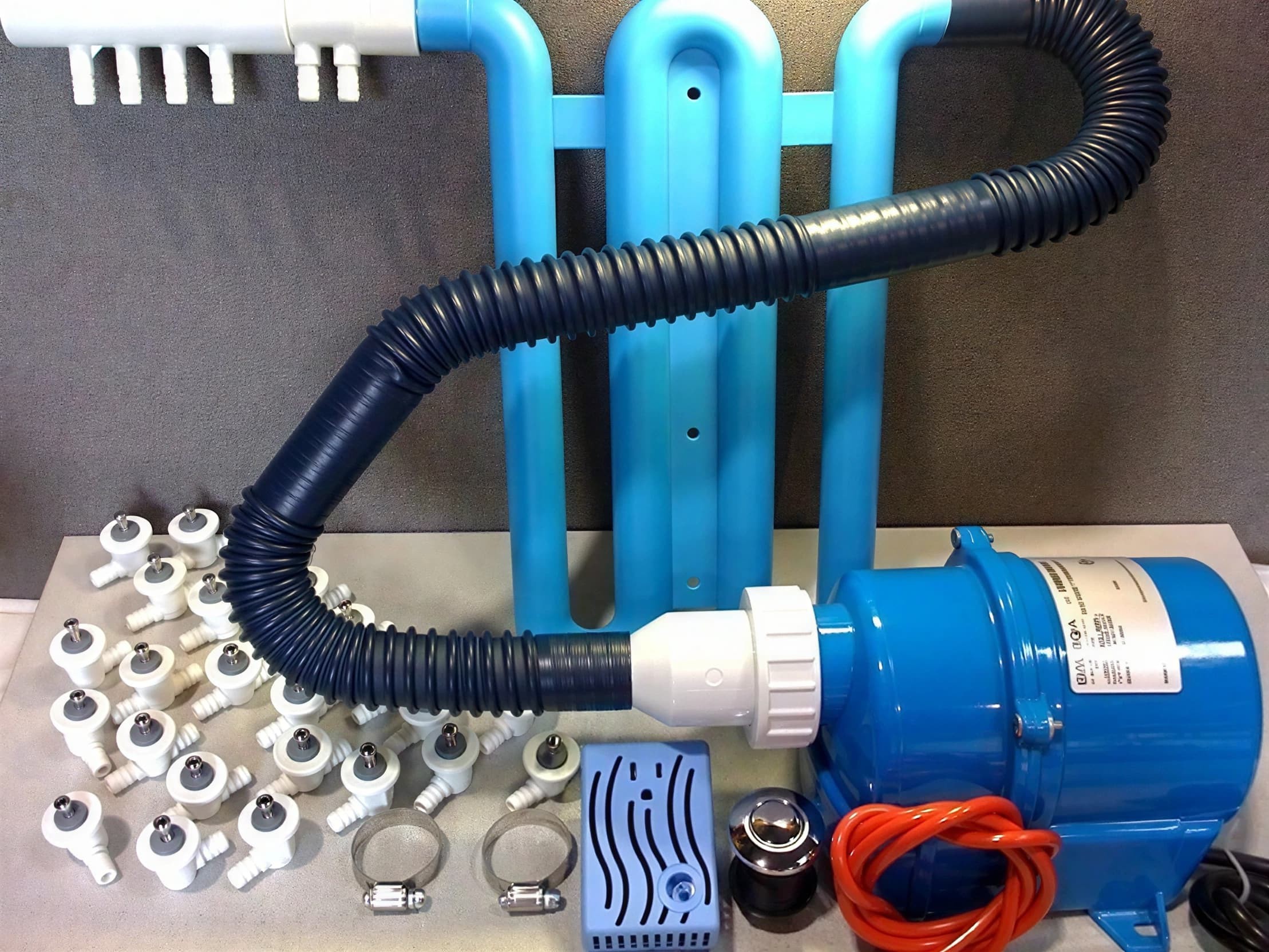
In some projects, we often see this typical situation:
A very powerful blower, but short pipes and few air outlets.
The result:
1. Airflow too strong
2. Noise gets amplified
3. Water splashes everywhere
A bigger blower isn't always better.
Power, pipe length, number of outlets, and bend design must be considered as a whole.
Where possible:
1. Choose a blower with a power level that fits the system.
2. Or use structural solutions to reduce noise. Simply adding a stronger blower usually makes things worse, not better.
Air Blower FAQ
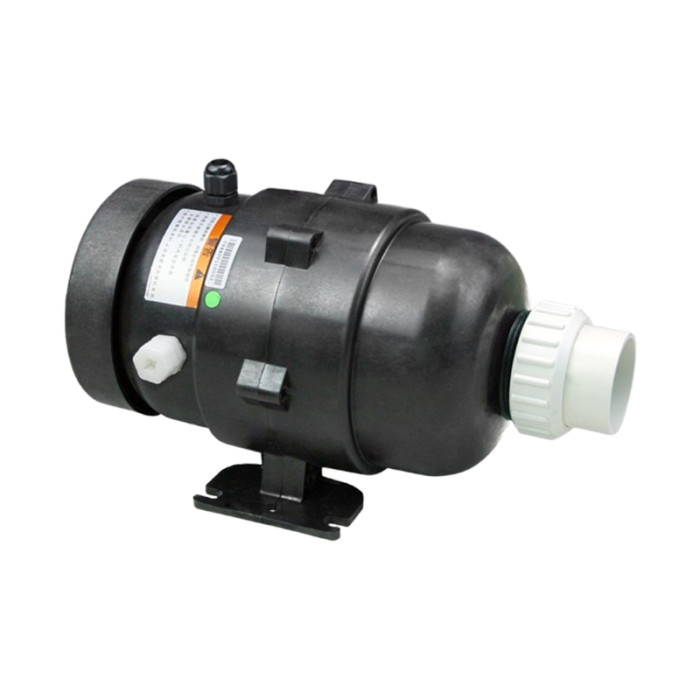
What power options are there for air blowers?
Commonly from a few hundred watts up to 2 HP, for different system sizes and pipe complexity.
Why sometimes watts and sometimes horsepower?
They are the same concept of power. Different markets just use different units. You can convert to compare.
What certifications and MOQ does Hydrorelax offer for blowers?
We can provide multi-market certified options(CE,TUV,UL Recognised Parts). MOQ depends on the model and project needs.
We focus long-term on spa and bathtub component systems, providing stable OEM and support for brands in U.S. and European markets.
If you're working on product planning, not just a one-time purchase, understanding why a blower makes noise is really about understanding the whole system and how it works.
Sound is never just a problem, it's a direct feedback of structure, selection, and experience.
For product advice and support, please contact the Hydrorelax team.