




Hot Tub Cover Installation: Fixing Loose Screws and Ensuring Proper Fit
A durable, correctly installed hot tub cover is essential for safety, heat retention, structural protection, and long-term spa efficiency.
However, many homeowners, spa technicians, and OEM partners experience a common and frustrating issue during hot tub cover installation—using screws from an old cover to secure a new one often results in loose fittings, instability, and premature wear.
Why Proper Hot Tub Cover Installation Matters
Before addressing the loose-screw problem, it is important to understand why correct installation is so critical.
A high-quality, well-installed cover affects:
1. Energy efficiency and heat retention
2. Safety compliance (children, pets, public facilities)
3. Chemical evaporation control
4. Protection from weather and UV exposure
5. Longevity of hot tub shell and components
6. Reduced maintenance and spa repair costs
Improper installation is one of the major causes of hot tub cover hinge damage, uneven foam-core compression, strap misalignment, and sagging covers—all common issues seen in hot tub cover replacement and spa service calls.
Common Reasons Hot Tub Cover Screws Loosen
Many customers assume that the screws from an old cover can be reused to secure a new one, but in practice this often leads to:
1. Screws losing grip inside soft vinyl
2. Misaligned brackets due to incorrect cover orientation
3. Lack of internal reinforcement plates
4. Warping of the hinge or corner structure
5. Instability every time the cover is opened and closed
This issue is particularly common in lower-priced or generic replacement covers that lack the internal metal structure needed for secure spa cover hardware installation.
To prevent repeated loosening and ensure a long-lasting, stable installation, the following three technical principles are essential.
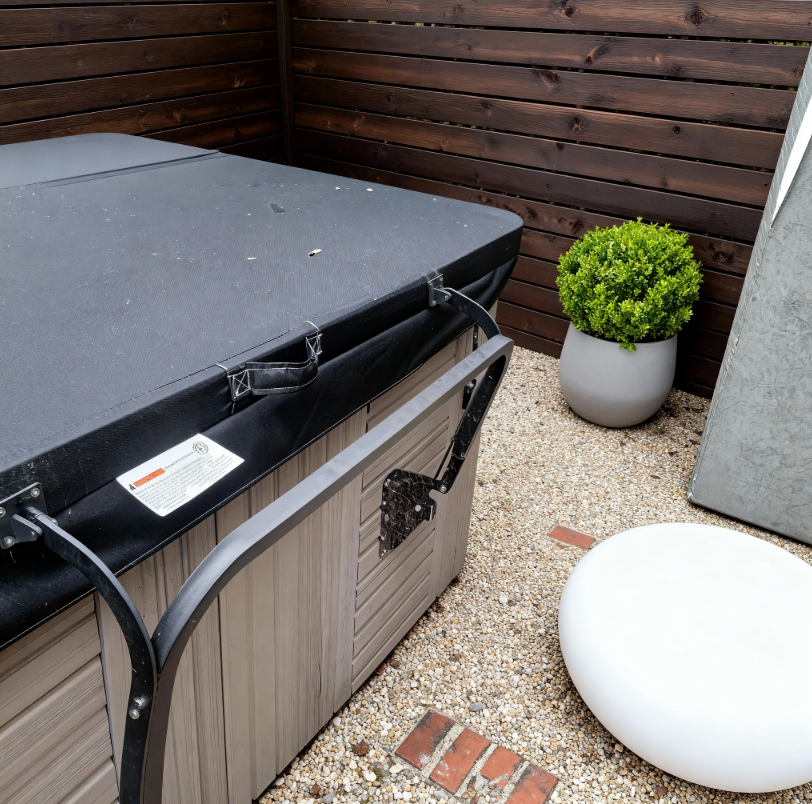
Correct Hot Tub Cover Orientation for a Secure Fit
A surprisingly high percentage of hot tub cover installation problems come from incorrect alignment. Most spa covers include a warning label or safety tag stitched near the hinge. This label must face the front of the hot tub.If the label is facing backward, sideways, or away from the user, the cover is installed incorrectly.
Incorrect orientation results in:
1. Misaligned hot tub cover hinge
2. Uneven pressure on the foam core
3. Poor seal along the center hinge
4. Straps that do not reach the lock receivers
5. Increased stress on screws and brackets
6. Higher chance of screws loosening over time
Common Hot Tub Cover Installation Problems and How to Avoid Them
Below are some frequent issues that users search on Google, together with technical explanations and solutions.
Hot tub cover screws keep loosening
Cause: No reinforcement plate / incorrect screw size
Solution: Install metal backing plate or reorder reinforced core
Hot tub cover not fitting properly
Cause: Wrong orientation; wrong hinge length
Solution: Reinstall facing front; verify hinge-to-hinge measurements
Hot tub cover hinge bending or sagging
Cause: Uneven structural support
Solution: Reinforced hinge design; correct alignment
Spa cover getting heavier over time
Cause: Waterlogging in foam core
Solution: Choose a sealed, heat-welded foam core during replacement
Hot tub cover straps not reaching the locks
Cause: Installed backwards
Solution: Reinstall with warning label facing front
Additional Best Practices for Secure Hot Tub Cover Installation
To maximize durability and reduce service calls:
1. Use stainless steel, rust-proof screws
2. Do not overtighten
3. Inspect existing brackets for corrosion
4. Replace damaged or warped hardware
5. Check hinge alignment before final tightening
6. Consider a heavy-duty spa cover for cold climates
7. Ensure the foam core density matches OEM specifications
8. Choose energy-efficient, insulated covers for heat retention
These steps help ensure a stable, long-lasting installation—critical for spas in hotels, resorts, wellness centers, and residential settings.
The Importance of Quality Components in Hot Tub Cover Installation
Even the best installation cannot compensate for poor structural design.
A well-engineered hot tub cover should include:
1. Reinforced hinge
2. Metal plate backing
3. UV-resistant marine-grade vinyl
4. High-density steam-sealed foam core
5. Double-stitched skirts and handles
6. Corrosion-resistant hardware
7. Tight-fitting center seal
For OEM clients and spa distributors, confirming these specifications not only improves user satisfaction but also reduces warranty claims and service costs.

Looking for Reinforced Hot Tub Covers?
Hydrorelax specialize in manufacturing durable, OEM-grade spa covers engineered for professional installers, spa retailers, commercial spas, and global B2B partners.
Our covers include:
1. Custom metal reinforcement plates
2. Precision hinge alignment
3. High-density insulated foam cores
4. Industry-standard safety compliance
5. Stable supply and consistent quality
6. OEM/ODM custom production capabilities
We understand the structural demands of modern spa systems and provide components designed for long-term stability—not temporary fixes.
For wholesale quotes, OEM partnerships, or technical consultations, please contact us directly!
Here are more guidance about hot tub cover!