




How to Choose the Best Aluminum Pergola: A Complete Buying Guide
Pergolas come in wood, vinyl, and aluminum, but aluminum has become the most popular choice for global bulk orders and commercial projects. Many products look almost identical, with simple frames, louvered roofs, and motorized systems, and all claim high quality materials and smart functions.
For buyers, the biggest challenge is avoiding low-quality products that look almost identical to premium ones. Understanding the structure matters more than judging appearance or features.
Structure of a Pergola
From a basic point of view, an aluminum pergola is not just a sunshade. It is a complete system made of several connected structural parts working together. What you see is a simple frame, but behind it is a clear engineering logic.
When you step under a finished pergola, what stands out first is the feeling of a solid, steady frame above you. It's built with vertical posts and horizontal beams working together as one structure. It may look simple, but this frame is what actually keeps everything stable, especially in strong wind and over years of use.
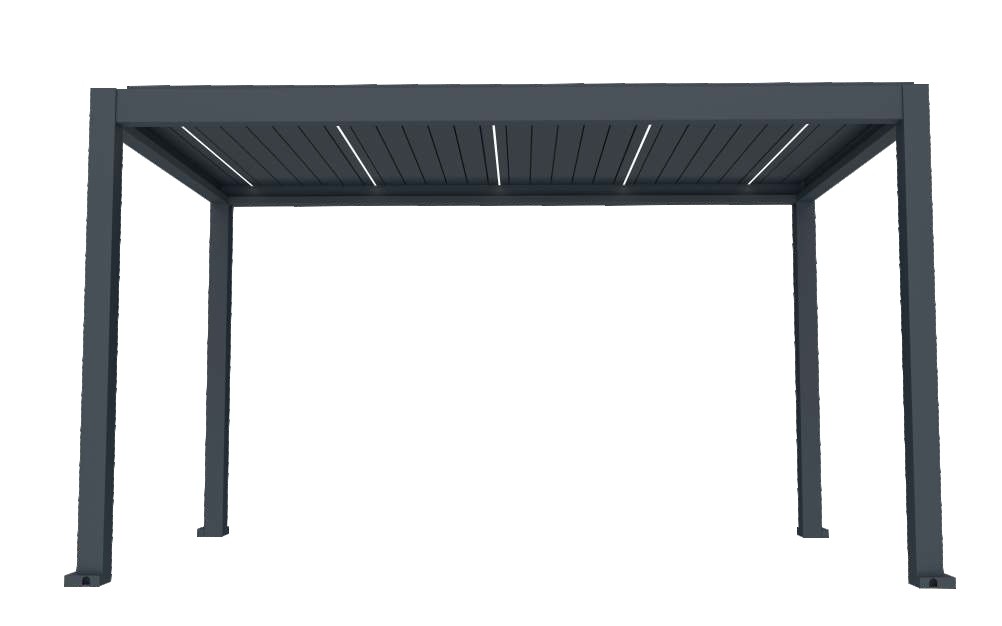
The vertical posts are often the most important part of the system, but they're also the most overlooked. In most aluminum pergolas, they're made from hollow extruded aluminum. This makes the structure lighter, and it also creates internal space for drainage, wiring, and motor components.
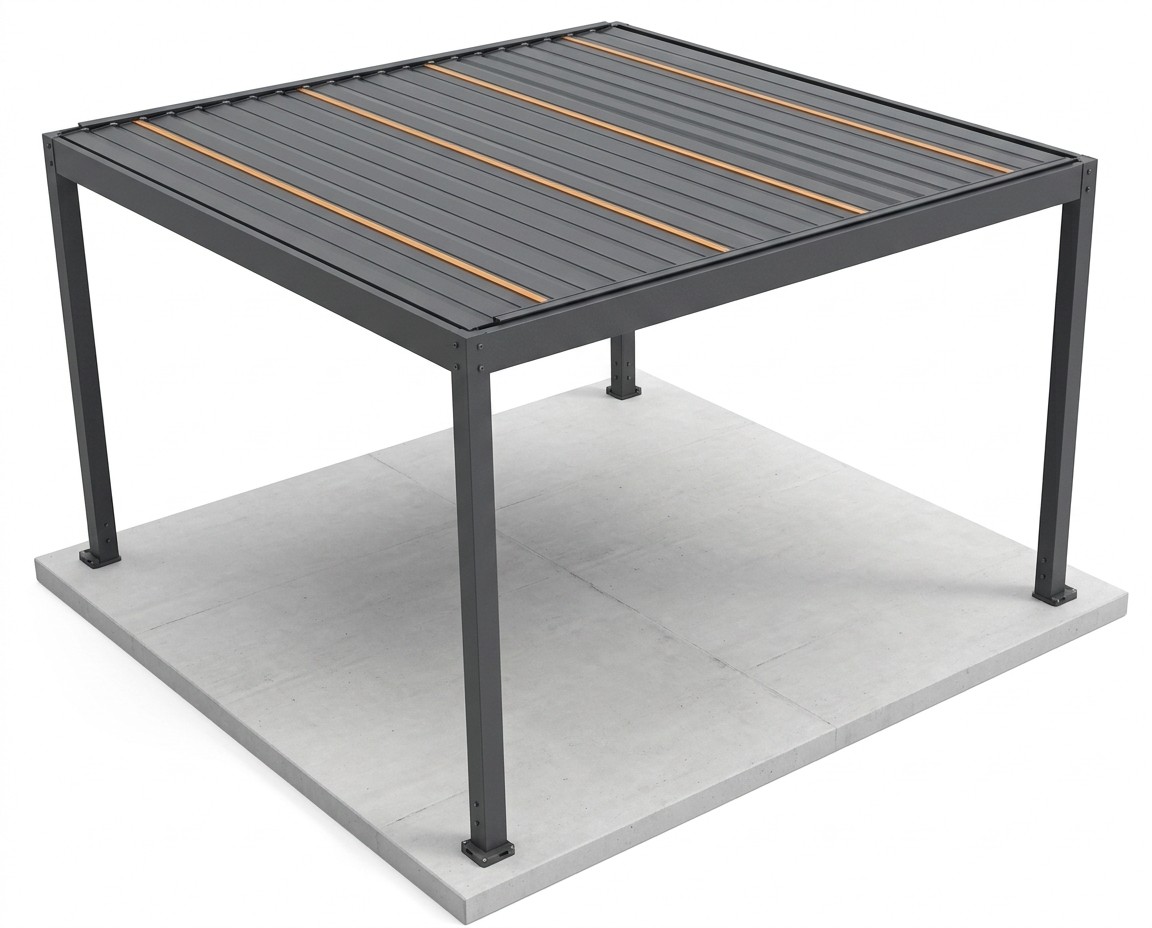
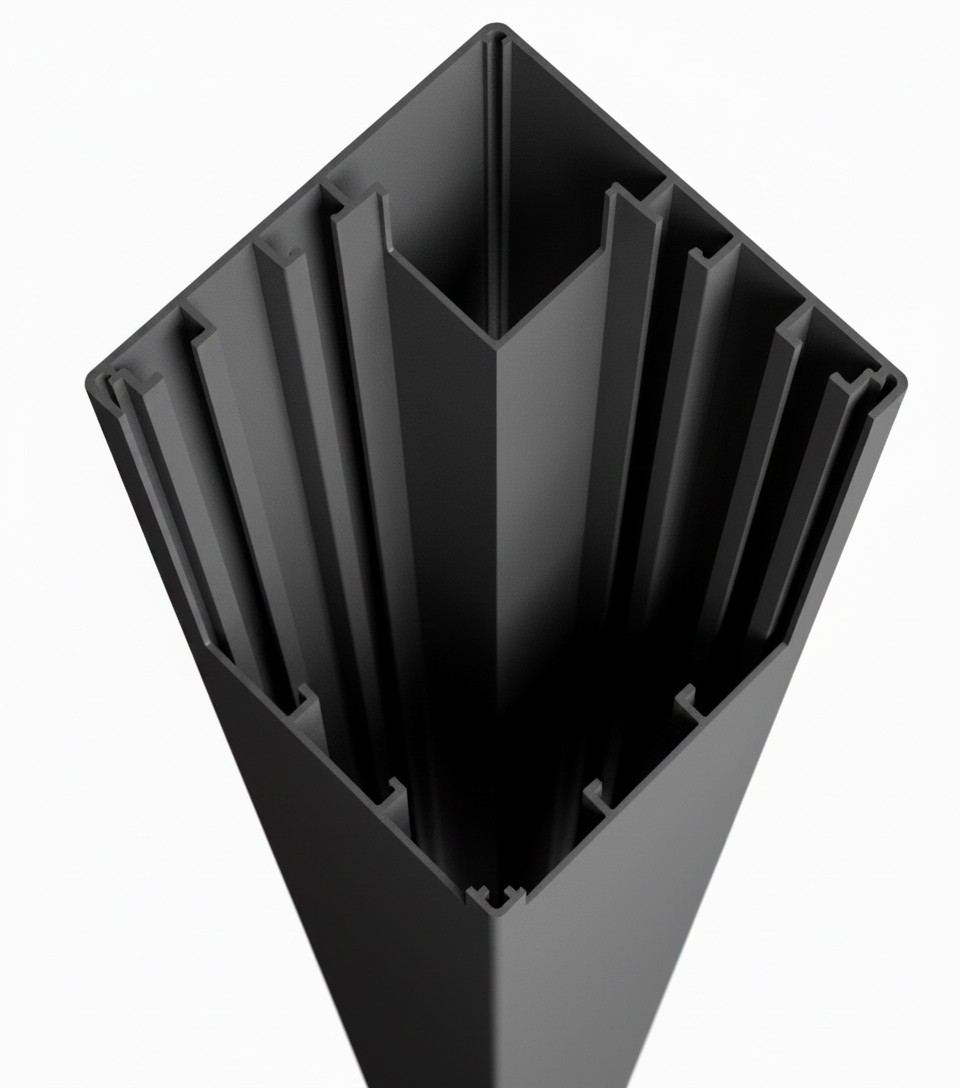
In higher quality products, the posts often use a double-chamber or multi-chamber structure. This improves strength and resistance to twisting while keeping the structure light. It helps the pergola stay stable in strong wind without bending or shaking.
The horizontal beams, on the other hand, serve to connect the posts and distribute loads. They link all the vertical posts laterally and also provide foundational support for the roof system.
Most aluminum pergolas on the market today use a louvered roof system, allowing you to control sunlight and airflow through adjustable louvers. At the core of this system are several key components, including the louvers themselves, the pivot connection system (Pivot Pins), and the linkage mechanism (Louver Bar / Linkage) that keeps the louvers moving in sync.
Although Pivot Pins may look like a small connection point, they actually handle constant rotational friction and structural load during everyday use. If the material quality or manufacturing precision falls short, you may start to notice looseness, squeaking noises, or even sticking and inconsistent movement over time.
When the louvers are closed, the roof must form a tight waterproof surface. When opened, the movement must stay smooth and consistent. This transition is a clear sign of build quality
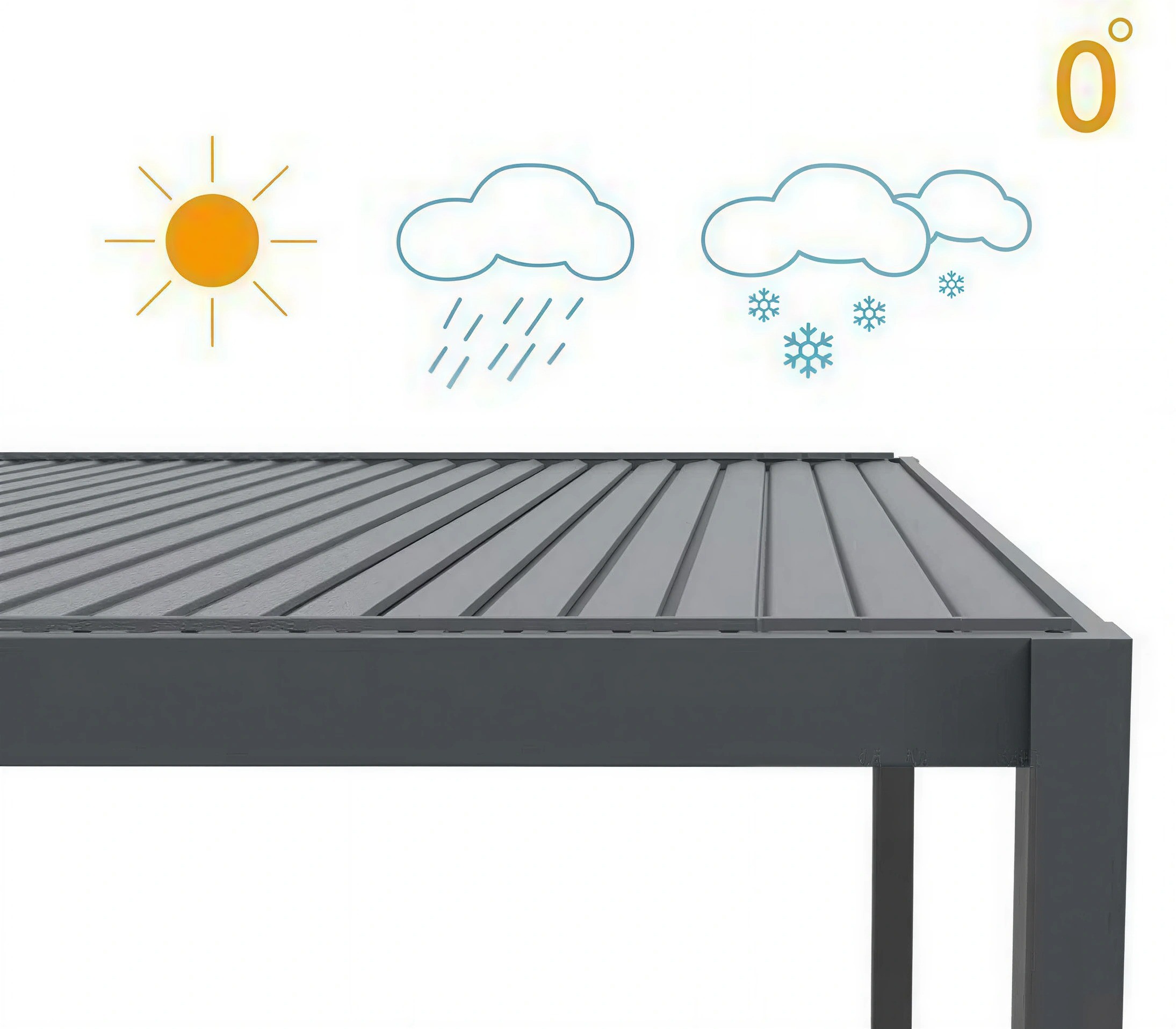
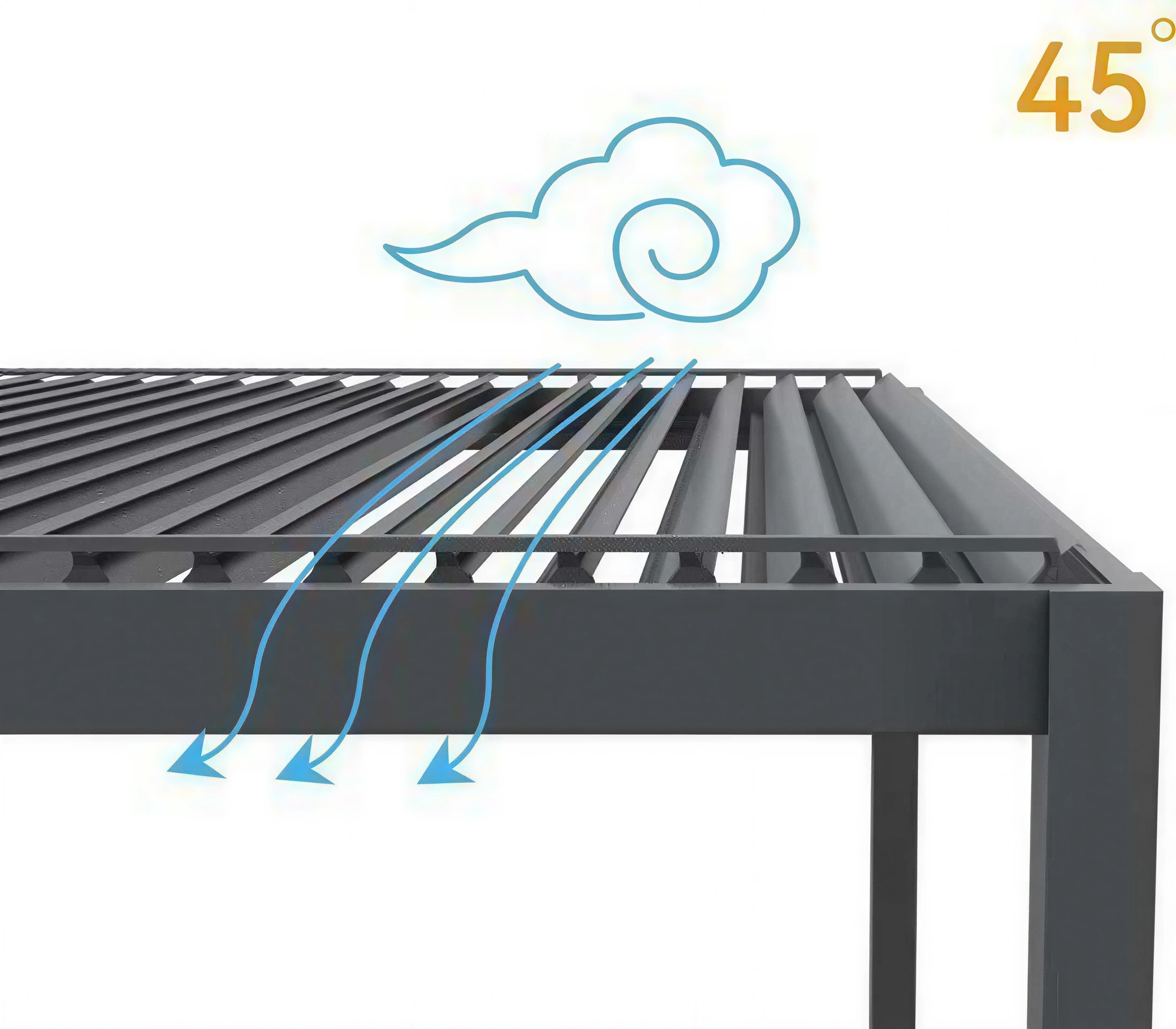
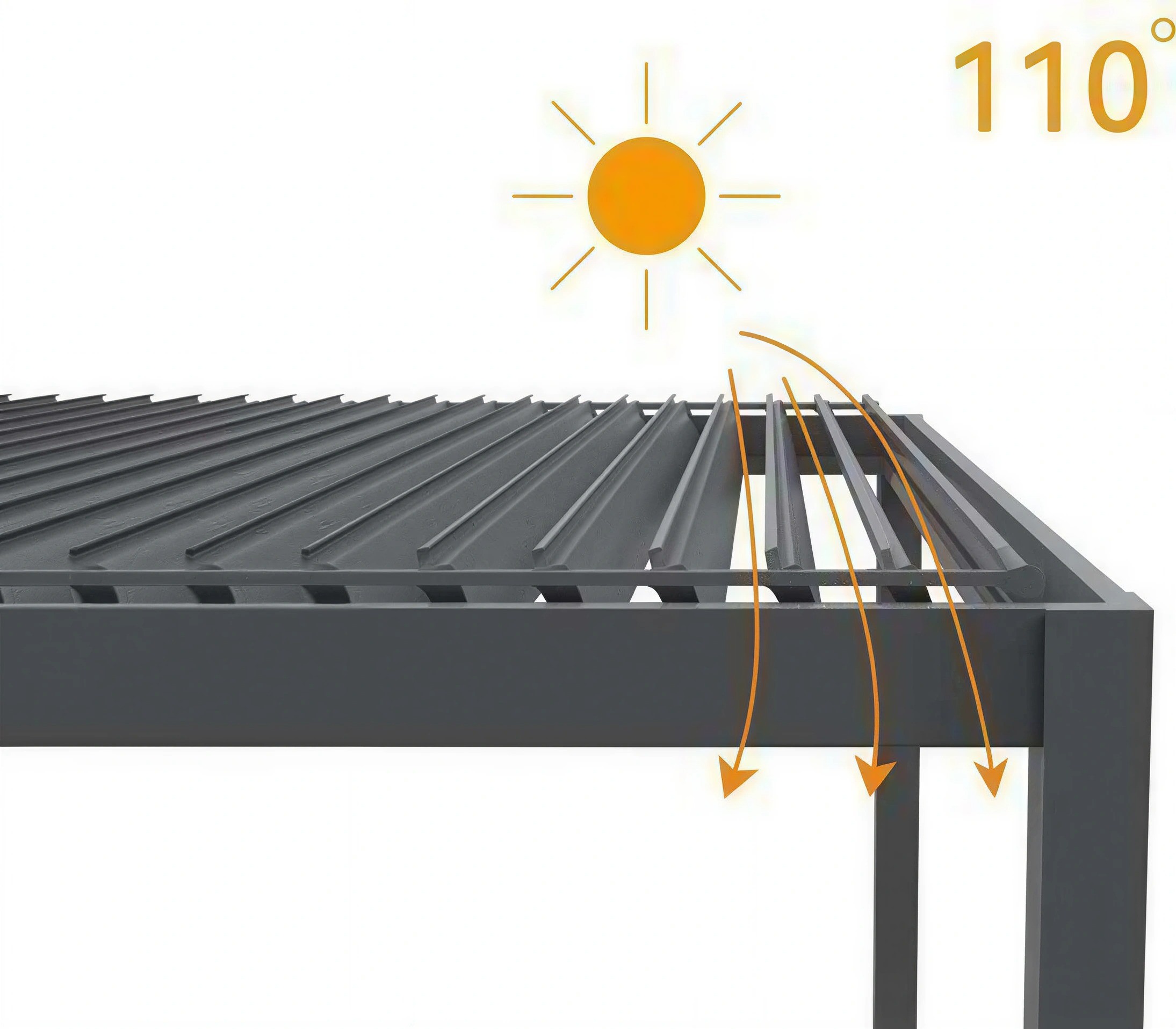
The drainage system is another key part that is often underestimated. In a well-designed pergola, drainage is not just water guiding. It is a complete flow path system.
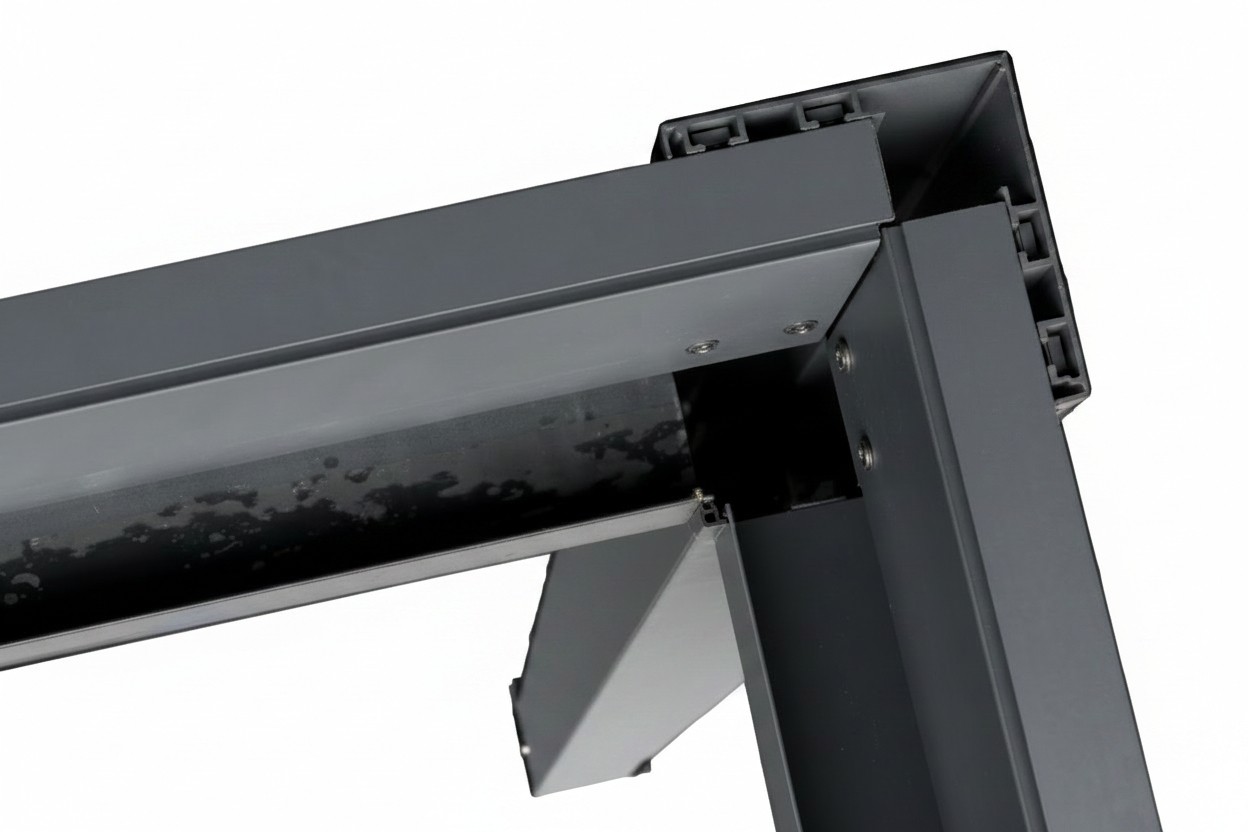
In some Pergolas with waterproof designs, the beams often incorporate internal drainage channels, allowing rainwater to flow along a predetermined path rather than accumulate on the top structure. Although this concealed design may seem simple, it actually demands high mold precision and structural consistency; insufficient machining accuracy can easily lead to leaks or poor drainage.
Rainwater flows from the louvers into channels inside the beams, then moves through hidden paths into the hollow posts, and finally exits from the bottom. The key is structural continuity. If any connection point is poorly designed, it can lead to water buildup or leakage, which affects the overall user experience.
What Makes an Aluminum Pergola Durable and Reliable?
In actual purchasing decisions, many pergolas try to attract buyers with added features such as motorized control, smart sensors, and lighting systems. However, long-term reliability is not defined by these extra functions. It is determined by the hidden structural quality that cannot be seen at first glance.
Aluminum thickness
Aluminum thickness is one of the most direct factors. Many suppliers say they use 'high-strength aluminum alloy,' but if you don't look at the thickness and structure, that doesn't tell you much.
Most standard pergolas use profiles around 1.2 to 1.5 mm. For places with strong wind or for commercial projects, thicker options like 2.0 mm or even over 3.0 mm are usually chosen to make the structure stronger and less likely to bend or deform.
Double-chamber post
Beyond thickness, the structural design of the profile is equally important. A double-chamber post offers better torsional strength and load stability compared to a single-chamber design. This difference becomes especially clear in large spans or windy environments.
Wind resistance
Wind resistance is something you'll often see in product specs, but honestly it's also one of the most marketing-heavy claims. Just by looking at a pergola, it's almost impossible to know how it will really perform in strong wind.
A more reliable way to judge it is to look at the whole system. Things like aluminum thickness, how the frame is connected, and how it is anchored to the ground matter much more than a wind rating on paper.
Rotation Angle
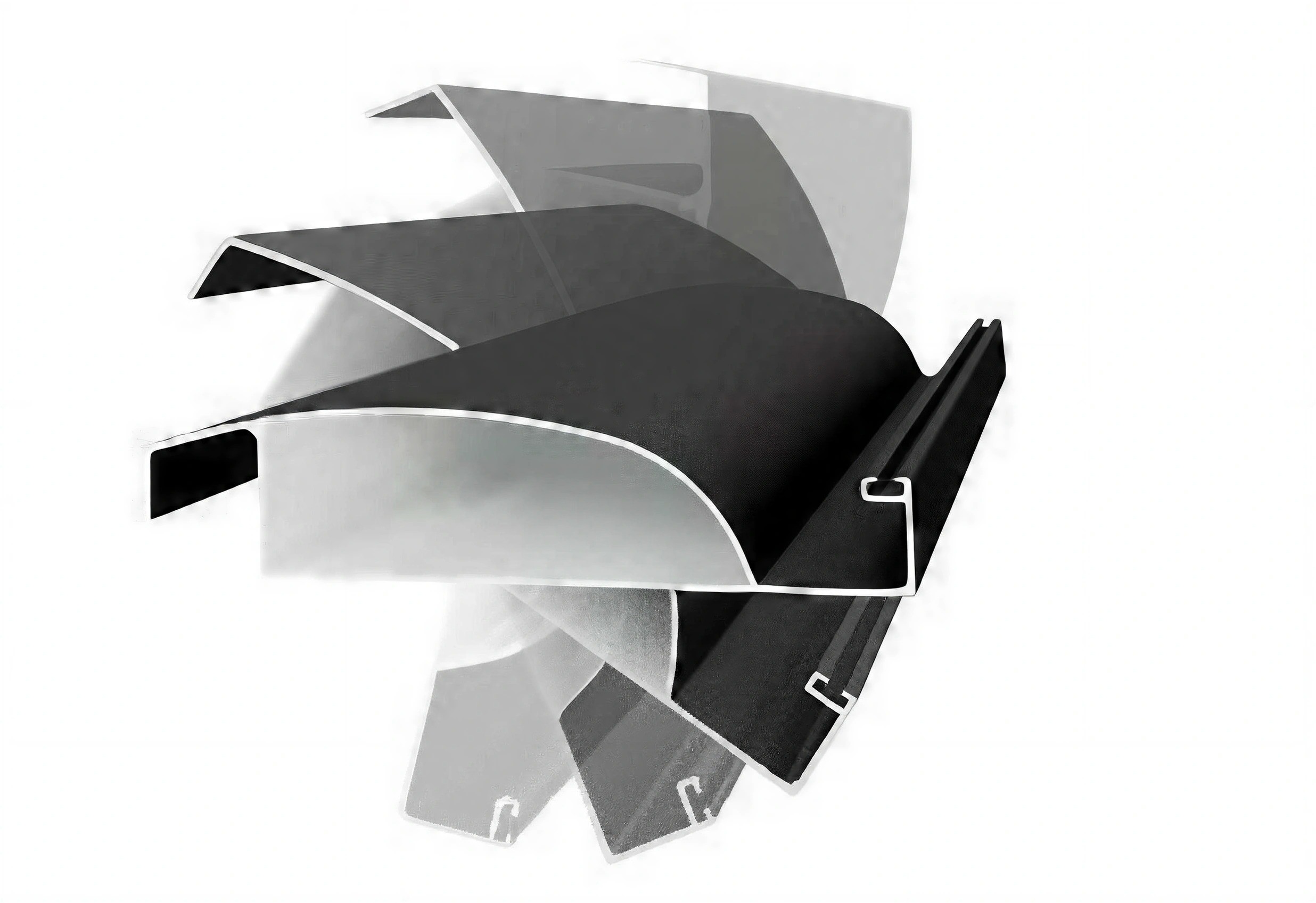
The rotation range of the louver roof is another detail that is often overlooked. In better systems, the louvers move smoothly through a wider angle, and they stay well synchronized as they adjust. When the synchronization is off, you can often see some slats moving slightly ahead or behind others, which can affect both the sealing performance and the overall appearance.
Motor System
The motor system really sets the ceiling for your overall experience with an electric pergola. A good motor should give you strong, stable torque while still running quietly and smoothly over time. Some low-cost systems can still open and close the roof, but you may notice performance drops or less stable control after a period of use.
Let's finish by talking about installation complexity. Claims like '4-hour quick installation ' are often more ideal than reality. In real projects, things like structural accuracy, part compatibility, and how clear the installation guide is will all affect your final result. The more standardized and modular the system is, the lower your installation risk, and the easier it is for you to control the overall project cost.
Best Pergola Purchasing Advice
In procurement, a simple but highly effective principle is to avoid comparing price alone and instead compare weight and structure.
For products of the same size, weight is often one of the most direct indicators of how much aluminum is used and how strong the structure is. A lighter frame usually means thinner profiles or simplified internal support. These products may work fine in the short term, but under long-term exposure to wind and rain, they are more likely to deform, loosen, or fail in drainage performance.
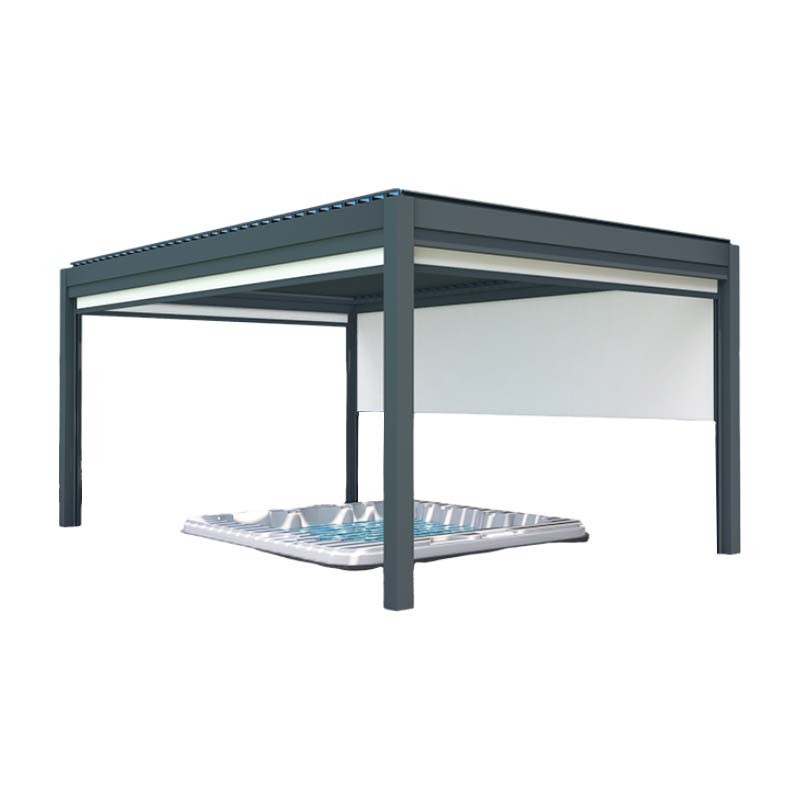
At the same time, buyers should also pay attention to whether the product uses a standardized structural system instead of a simple assembled design. The more integrated the structure is, the clearer the load path becomes, and the higher the long-term stability.
Contact the Hydrorelax team to learn more about aluminum pergola products.
About the Author
This blog is written by Shirley, who has many years of experience in the bathtub, spa products, and outdoor structure accessories industry. She focuses on product structure research and market analysis.
She is dedicated to sharing professional insights to help brands and manufacturers make more informed decisions, optimize their products, and enhance their market competitiveness.
Recommended Products
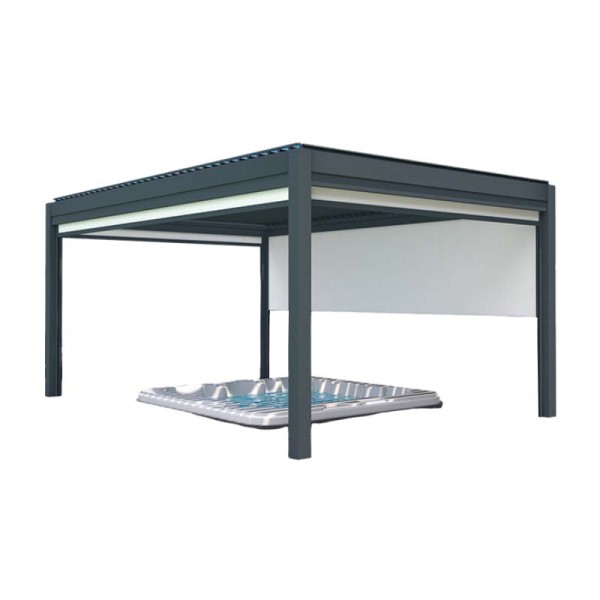
motorized Aluminum Pergola
Size:3000*4800*2700MM
1)Aluminium alloy 6063-T6;
2)Post:150*150*2.2-2.5mm;
3)Beam&gutter:220*123*2.5-4.5mm
4)Double layer Louver:193*40*1.7mm
5)Louver with LED light:dual color (Cold white 6000K and Warm yellow 3000K)
Application & Control: Ideal for bathtub/pool areas and family courtyards; controlled via remote controller plus four-sided skylight switches
motorized Aluminum Pergola
Size:3000*4800*2700MM
1)Aluminium alloy 6063-T6;
2)Post:150*150*2.2-2.5mm;
3)Beam&gutter:220*123*2.5-4.5mm
4)Double layer Louver:193*40*1.7mm
5)Louver with LED light:dual color (Cold white 6000K and Warm yellow 3000K)
Application & Control: Ideal for bathtub/pool areas and family courtyards; controlled via remote controller plus four-sided skylight switches