



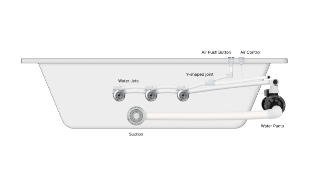
25 FAQs About Hot Tub Ozone Generators
1. What is the main role of ozone in spa water treatment?
Ozone (O₃) is a strong oxidizer. It quickly kills bacteria, viruses, and algae. It also breaks down sweat, oils, and other organic waste, and helps remove chlorine and bromine byproducts that can cause bad smells and skin irritation.
2. Can ozone replace chlorine or bromine completely?
No. Even though ozone is very strong, it breaks down quickly in water (about 20–30 minutes). It cannot provide long-lasting protection in the water. You still need a small amount of chlorine or bromine.
3. How much can ozone reduce chemical use?
In a typical spa system, ozone can reduce chemical use by about 70%–90%. It also lowers the need for pH adjusters and algaecides.
4. Is ozone effective against Cryptosporidium?
Yes. Ozone is very effective at inactivating Cryptosporidium cysts. Chlorine at normal low levels is not very effective against it.
5. What is Corona Discharge technology? How is it different from UV ozone?
Corona Discharge (CD) uses high voltage to create ozone from air. It produces more ozone and is more stable, so it is the most common choice for spas.
UV ozone uses ultraviolet light to create ozone. It produces less ozone and is more affected by temperature, so it is usually used in small pools or low-end systems.
6. How do I choose the right ozone output for my spa size?
For a standard spa of 500–1000 gallons (about 1,900–3,800 liters), 50–100 mg/hr is enough. For larger spas over 1,500 gallons or commercial tubs, 200–400 mg/hr is recommended.
7. Can 110V and 220V ozone generators be swapped?
No. You must match the voltage with your spa control system. Wrong voltage can burn the circuit board or make ozone output unstable. Also check the connector type, like AMP plug, mini-JJ, or hardwired.
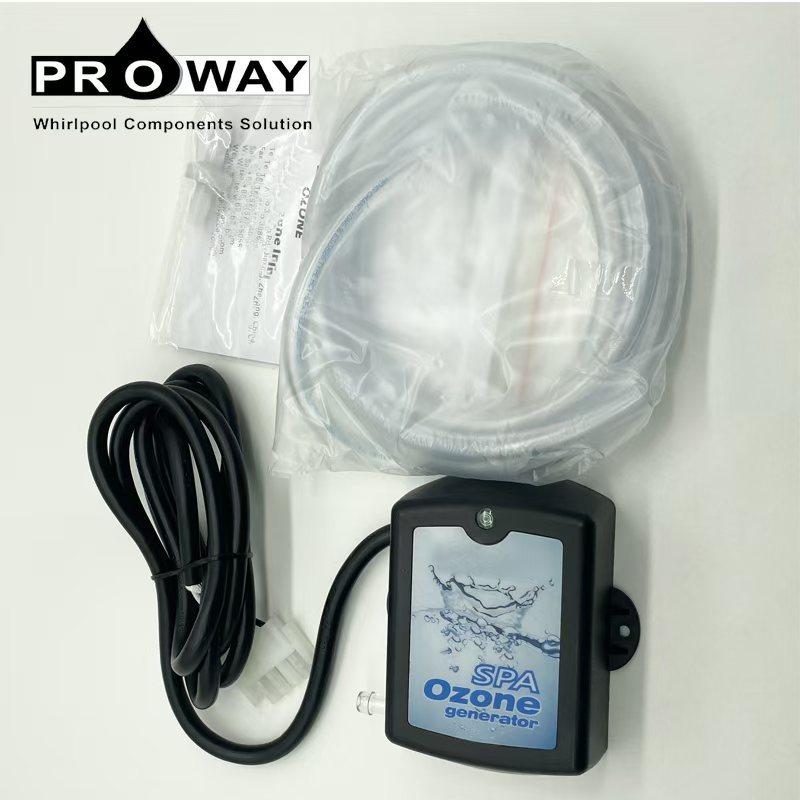
8. Should I choose quartz tube or ceramic plate technology?
Quartz tube systems handle heat and moisture better and usually last longer, making them a better choice for humid environments.
Ceramic plate systems cost less and can produce a higher ozone output, usually around 250–600+ mg/hr. However, they are more sensitive to moisture, may turn yellow over time, and usually do not last as long. The best choice depends on your budget, spa size, and how much ozone output you need.
9. What IP protection rating should an ozone generator have?
A standard spa ozone generator should be at least IPX4 (splash-proof). If it is installed inside a cabinet, a higher rating is usually not necessary, but the wiring terminals still need proper waterproof protection.
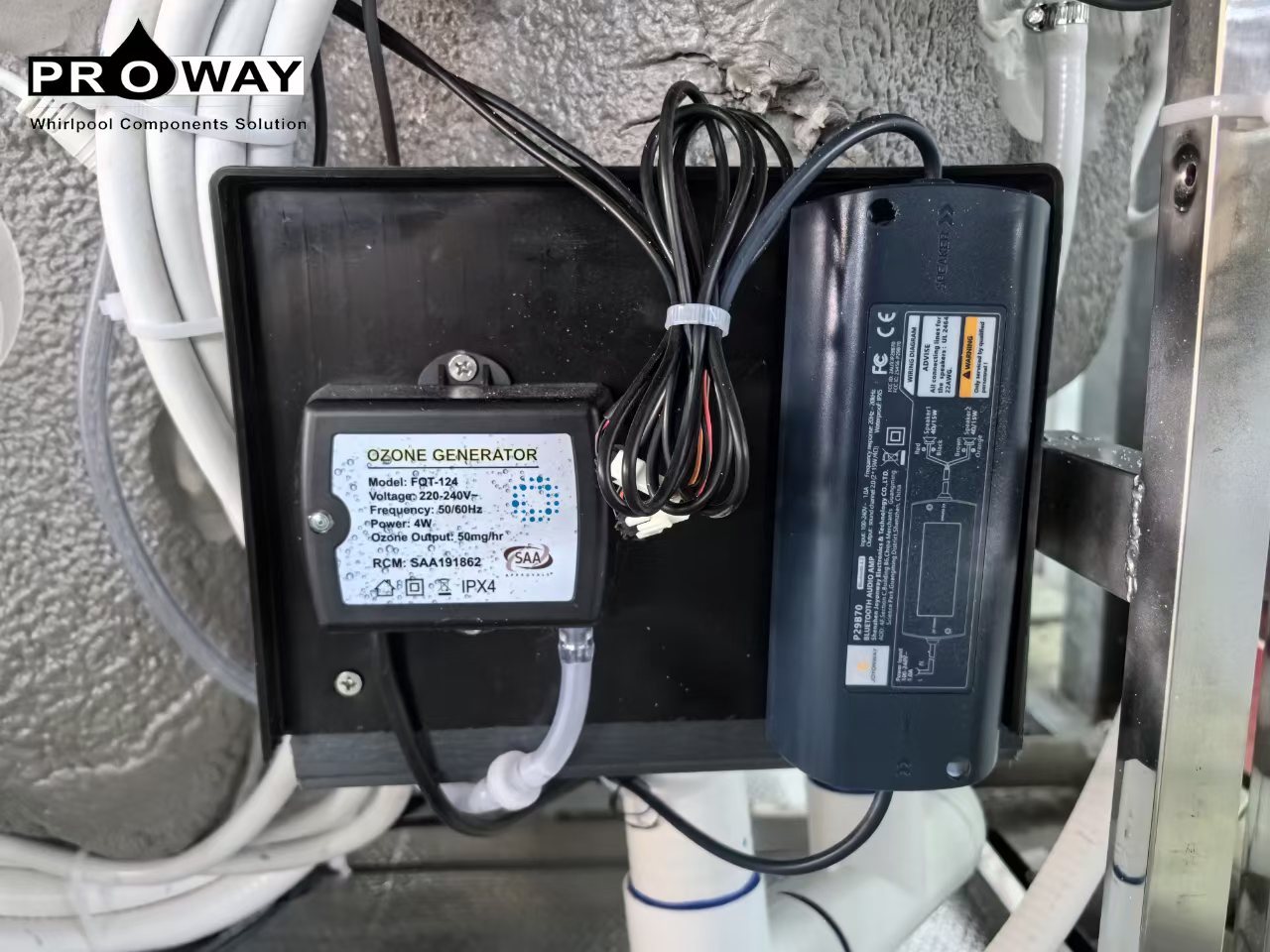
10. Where is the best place to install an ozone generator?
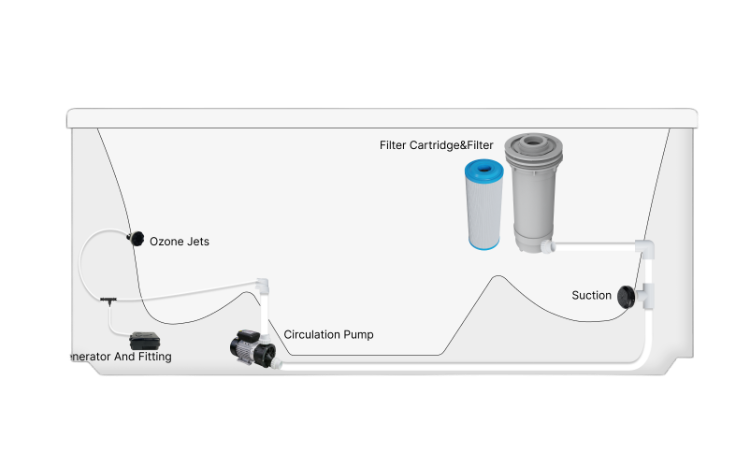
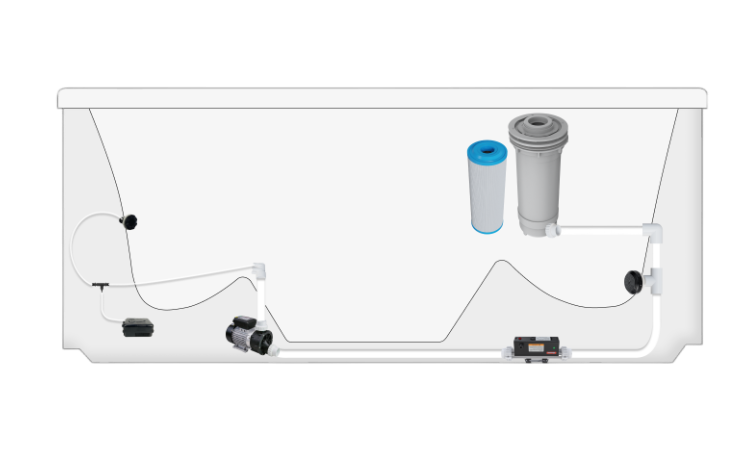
It should be installed in a dry area above the water level and away from heat sources like heaters and pumps. The goal is to use gravity to prevent any condensation from flowing back into the unit.
11. Why must a check valve be installed in the ozone line?
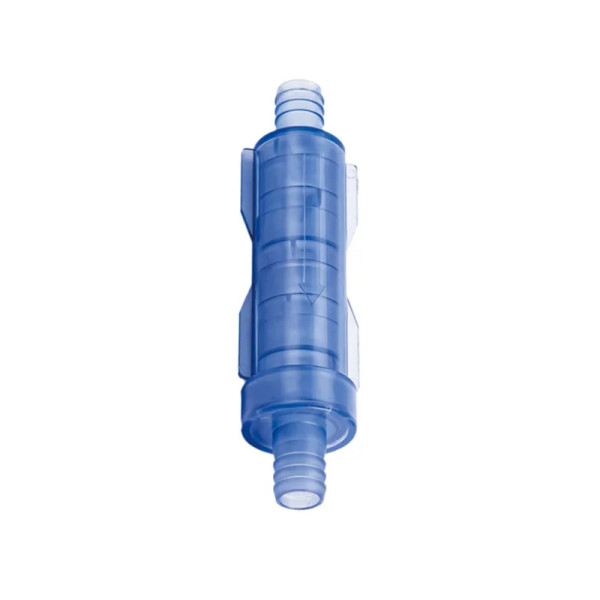
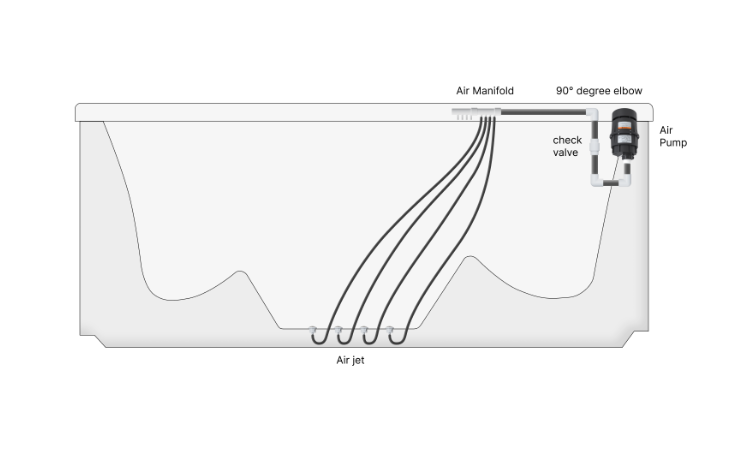
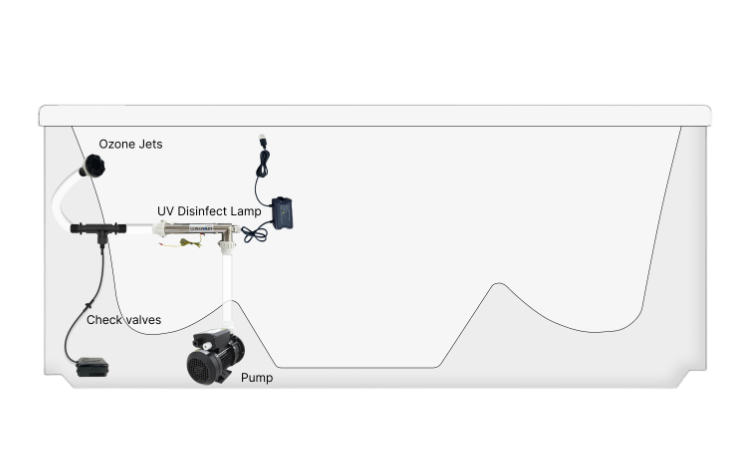
A check valve helps stop spa water from flowing back into the ozone generator. If water gets inside, it can damage the unit, cause electrical problems, or even crack the ozone plate.
12. Does the direction of the check valve matter?
Yes. The arrow must point toward the spa water flow direction. If installed backwards, the venturi system will not work and ozone will not be drawn into the water.
13. What is a Hartford Loop?
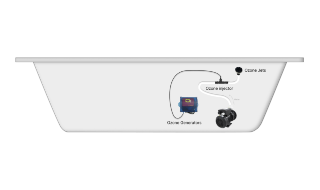
It means shaping the ozone tube into an inverted U inside the cabinet, with the highest point above the water line. Even if the check valve fails, water will stay trapped in the loop and cannot reach the unit due to gravity.
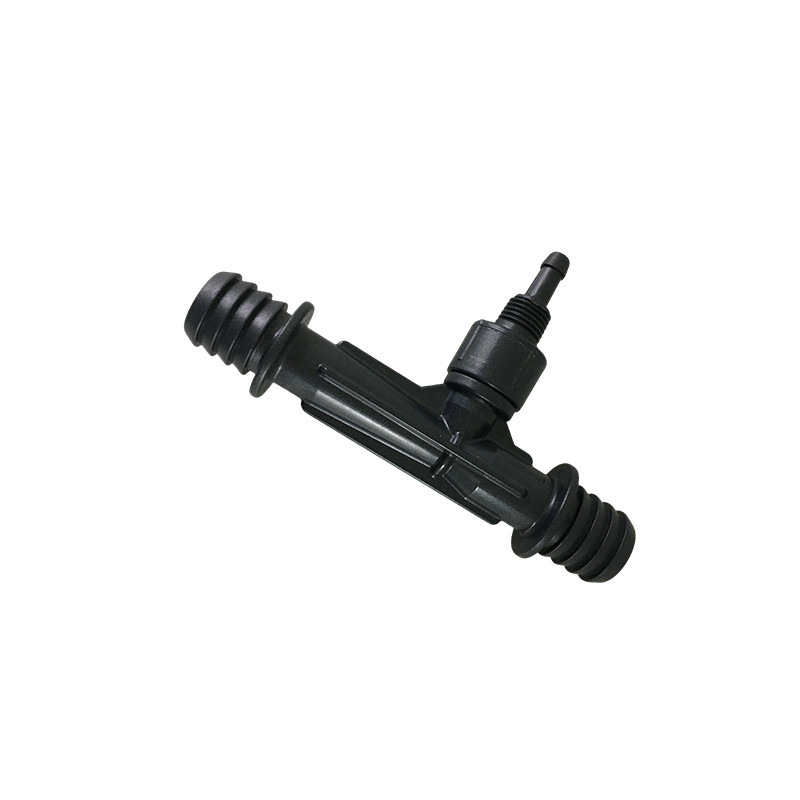
14. How should the ozone injector be installed?
It must be installed in the correct water flow direction. Keep at least 5 pipe diameters of straight pipe before and after the injector to ensure stable negative pressure from the venturi effect.
15. Is there a limit to the ozone tubing length?
Yes. The longer the tube, the higher the resistance and the more ozone output is lost. It is recommended to keep it under 6 feet (about 1.8 meters), usually with a 1/4 inch inner diameter.
16. Can ozone be injected directly before the heater?
Not recommended. High temperature reduces ozone solubility and may also react with some heater materials. The best location is after the pump outlet or after the filter.
17. Do I need special tubing for installation?
Yes. You must use ozone-rated tubing, usually PTFE or special silicone tubing. Regular PVC or rubber tubing will age quickly, become brittle, and crack under strong oxidation.
18. How do I test for air tightness after installation?
After installing, you can pressurize the system and brush or spray soapy water on every joint. If you see bubbles, that's where the leak is. Just make sure the ozone generator is turned off while you're doing the test.
19. Does the ozone system affect pH levels?
Yes. Ozone oxidizes organic matter into CO₂, which can slightly lower pH levels. You should monitor water balance regularly and add alkalinity increaser when needed.
20. How long does a hot tub ozone generator last?
The lifespan of a Corona Discharge (CD) cell is usually about 3–5 years (around 8,000–10,000 hours). After that, ozone output will drop noticeably.
UV ozone systems also last about 3–5 years, but the UV bulb inside usually needs to be replaced every 12–18 months.
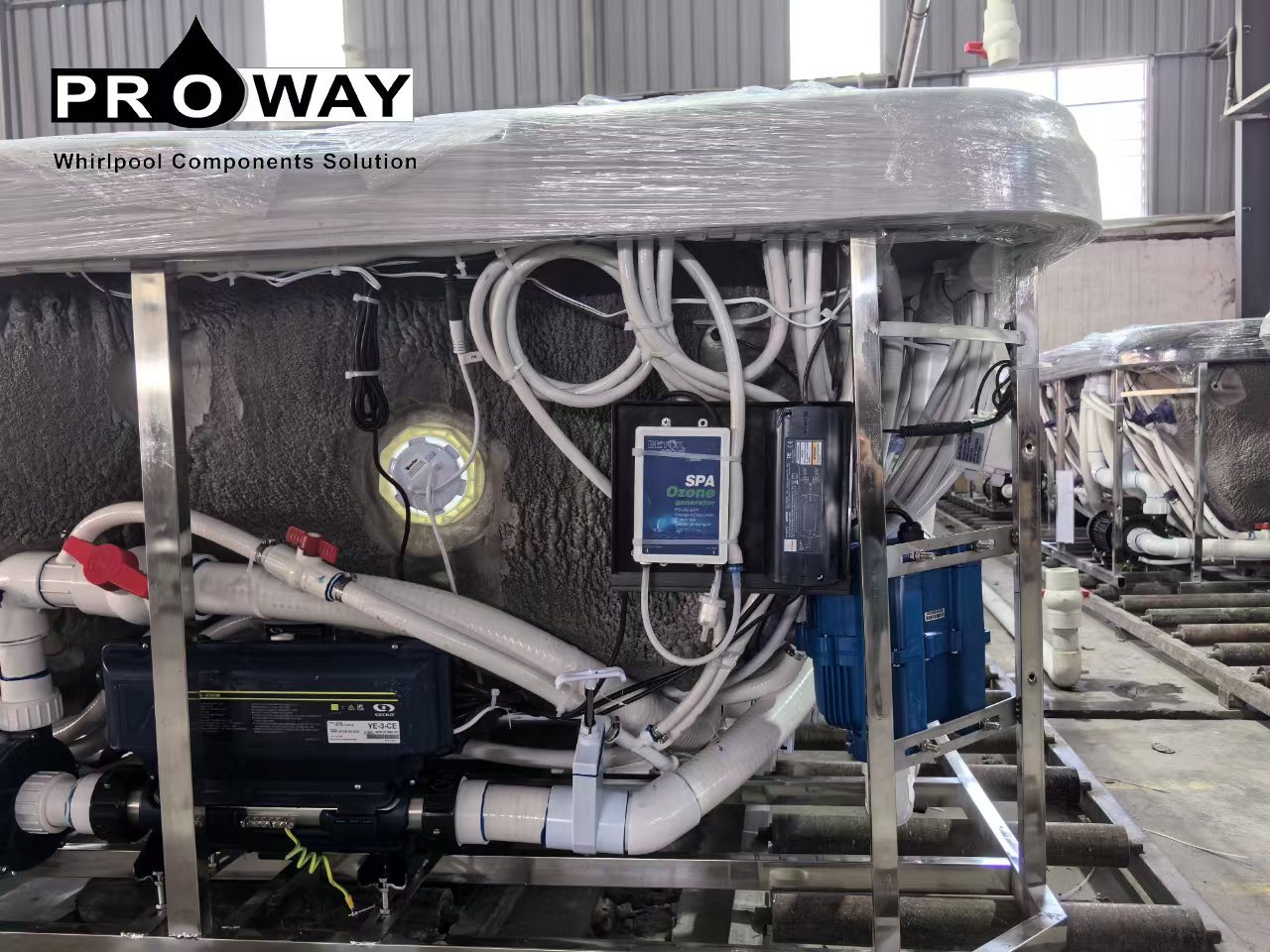
21. How can I tell if the ozone generator is still working?
Most units have a blue LED light. But this only shows power is on, it does NOT confirm ozone production.
The most accurate way is to test the water using ORP (oxidation-reduction potential) test kits or a meter.
22. How should I handle the ozone system when the spa is not used for a long time (winter draining)?
Turn off the power first, then disconnect the ozone tube and keep the unit somewhere dry and indoors. Before you start it again, make sure the check valve isn't stuck or blocked.
23. Problem: The ozone generator does not work (no blue light).
Check:1.Controller fuse 2.Power supply voltage 3.Control relay signal 4.Internal wiring of the unit
24. Problem: Blue light is on, but no bubbles or very few bubbles.
Check:1.Check valve blockage or damage 2.Bent or blocked air tubing 3.Venturi injector clogging 4.Low water flow from the pump
25. Problem: ORP readings stay low and never improve.
Possible causes: low ozone output or fast ozone consumption.
Check:1.Aging ozone plate or CD cell 2.High total dissolved solids (TDS) in water 3.High phosphate levels in the water
Final Words from Hydrorelax
We hope this guide helps you quickly solve common problems. If you still have questions, contact the Hydrorelax team. We are always happy to help.
And if you are looking for an ozone generator or a complete ozone system, we are happy to support you with the right solution.
Recommend Product
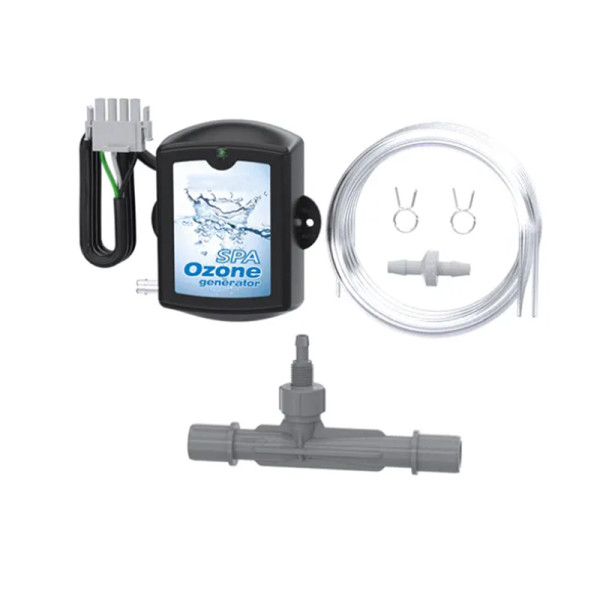
AC110-240V/50-60HZ
Ozone output: 50 mg/hr
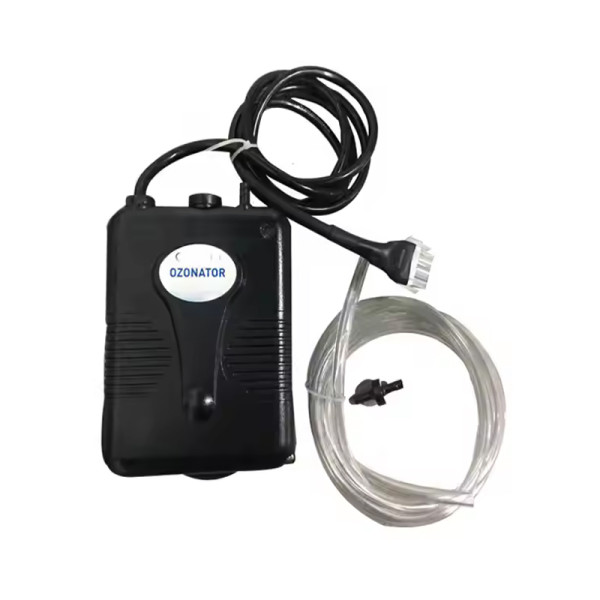
AC 110V or 220V
Ozone output:200mg/hr
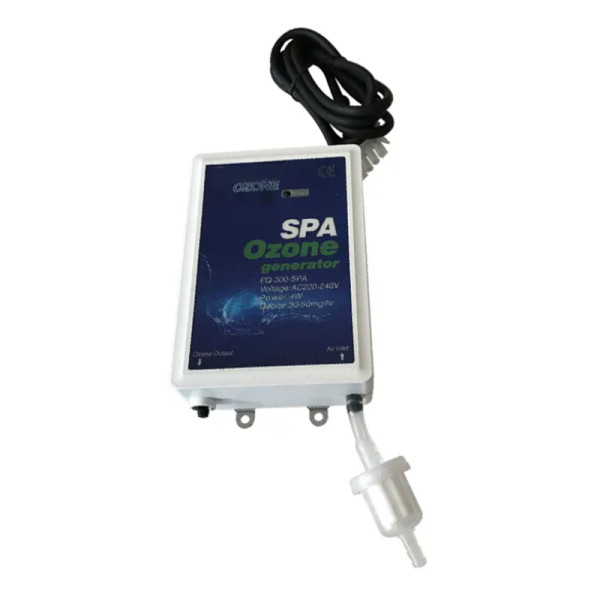
AC110-240V/50-60HZ
Ozone output: 50 mg/hr